Chef's Notes
Fumet quantity is extremely important.
Here is the rule:
150 gr. rice a person.
Rice needs three times in weight of water.
So 4person by 120 gr by 3 times= 1 liter and a half of FUMET.
Quality of water is another important issue. Hard water (higher concetration of calcium) is better than soft. If unsure use bottled water with hight mineralization.
Why is so important the quantity: Is neccesary to use exact water at begining of boling as posterior addition is not a good idea and if it take short then rice would ot get cooked, being hard. opposite if excess of water then rice became over cooked and pasted.
Yes, the three textures are not easy.
Step 1: Caldo de Pollo, chicken fumet
- Bones of 1 cicken,
- water 1,5 litre
- onion, 150 g
- carrod, 200gr
Boil all ingredients for 30 minutes.
release foam and dirties over surface. degrease and it keep it warm mean while other steps are done.
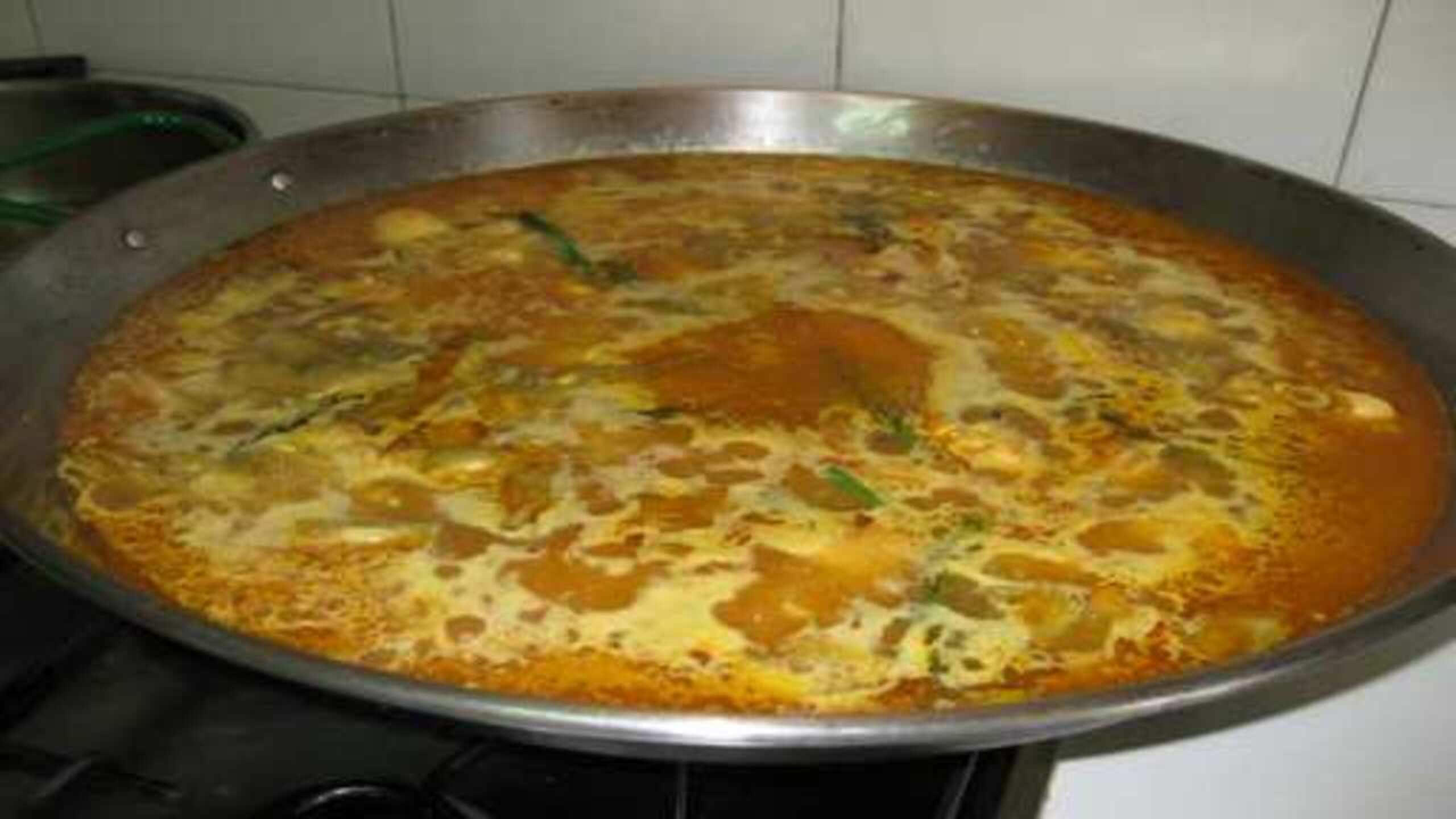
I use to have freeze fumet , so I haven’t got photos. The photo attached show color and textures that fumet must have.
Fumet quantity is extremely important. here is the rule
150 gr. rice a person.
Rice needs three times in weight of water.
So 4person by 120 gr by 3 times= 1 liter and a half of FUMET.
Quality of water is another important issue. Hard water (higher concentration of calcium) is better than soft. If unsure use bottled water with hight mineralization.
Yes, the three textures are not easy.
Step 2: Sofrito, minimum sofrito
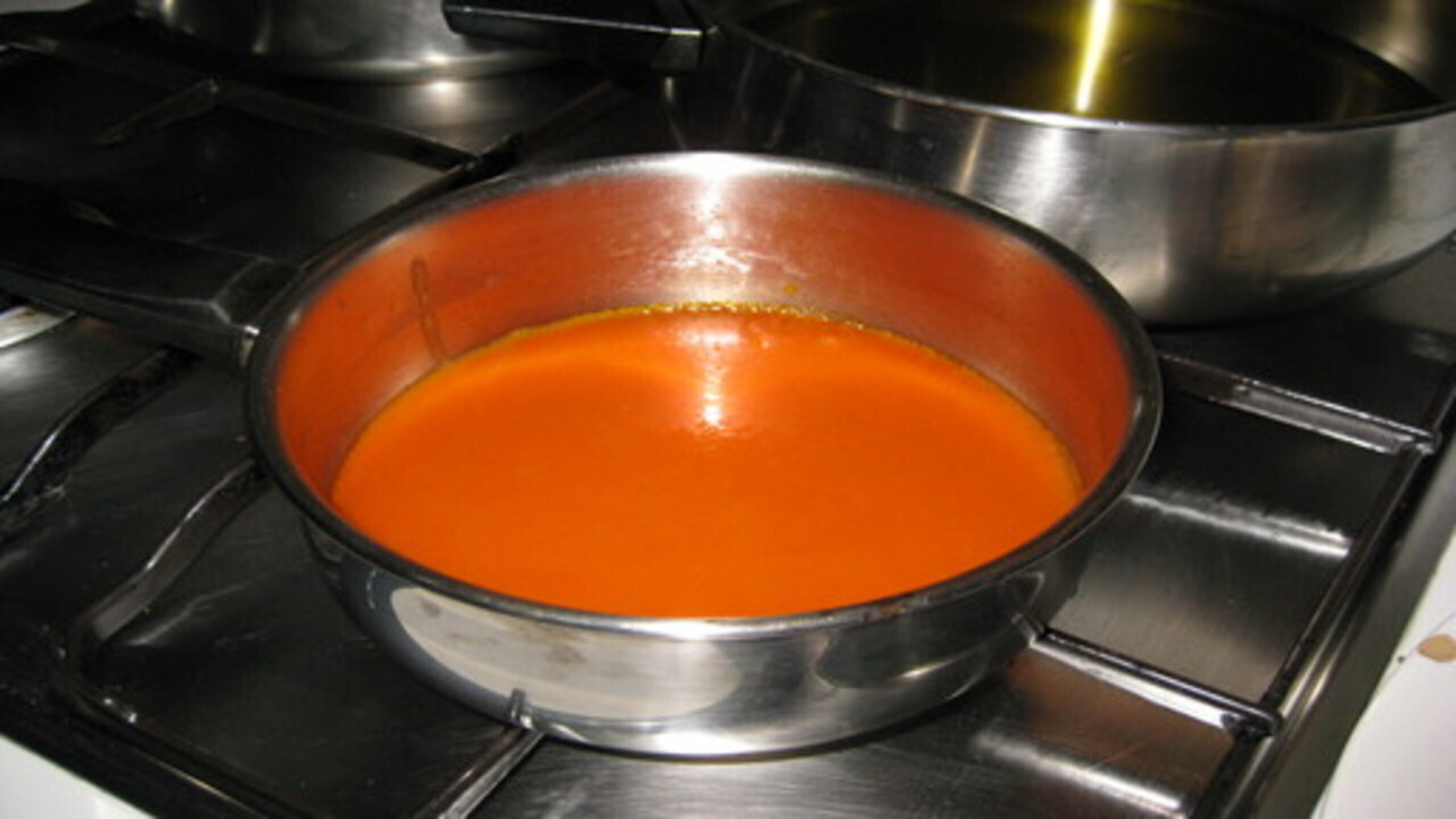
- Tomato 1kg
- Olive oil, extra vigen, 100cc
Sofrito is usually made of a bunch of vegetables, fried slowly with olive oil. But this a minimum version for shake of simplicity and , I prefer,there is not vegetable debris between rice.
So only tomato.
- peel of tomatoes
- release seeds
- cut into very little pieces
- cook slowly till it reduce to a 25% loosing water, till a dark paste.
Step 3: Chop chicken
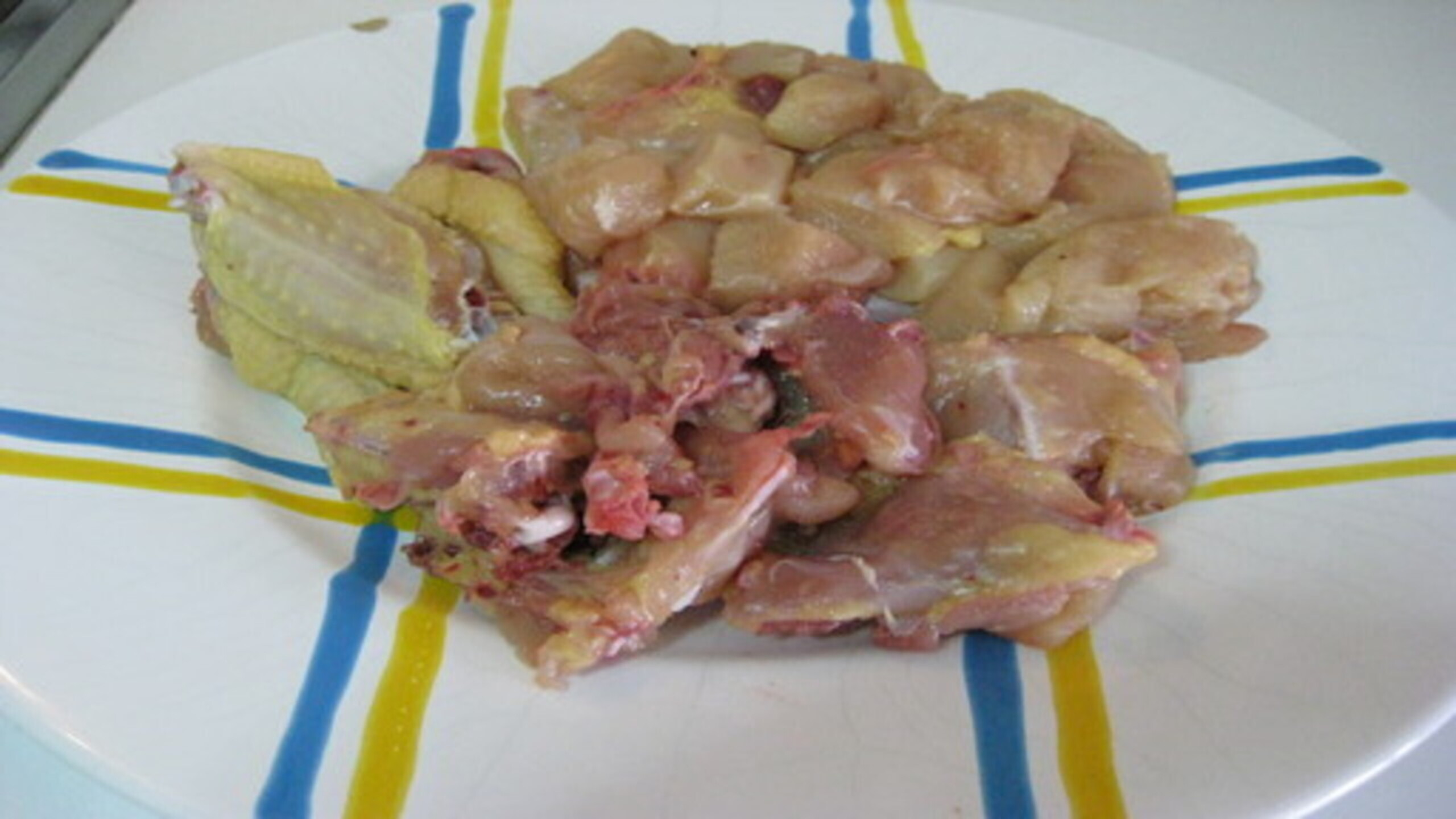
- 1 cicken 1,500 kilos.
The better the chicken the best are the results.
Chop it into pieces mid size. As bones has been used for caldo, this pieces are almost bones free.
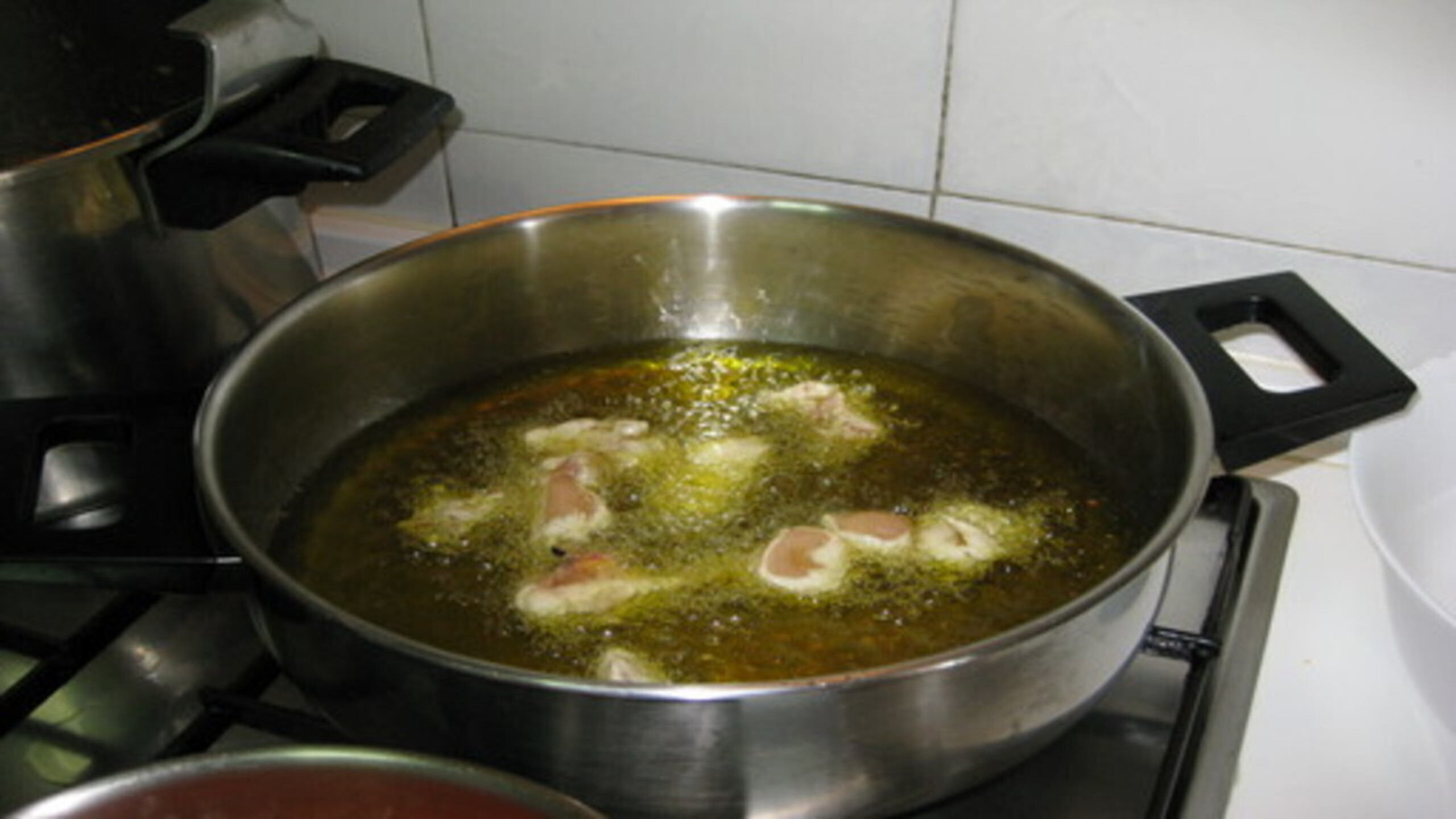
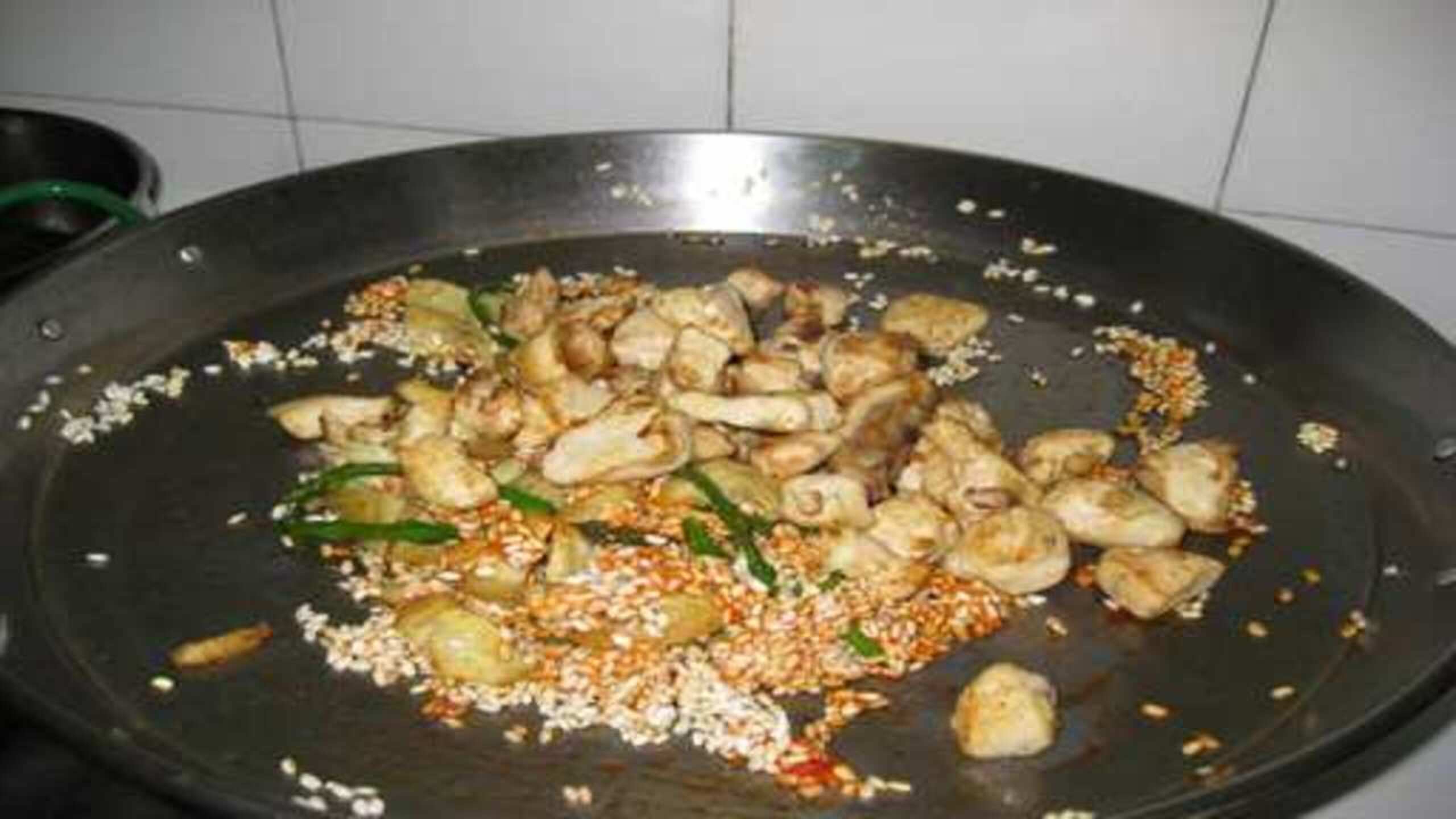
Step 4: Frying pieces of chicken
Very hot clean olive oil.
fry every piece till brown, not all together.
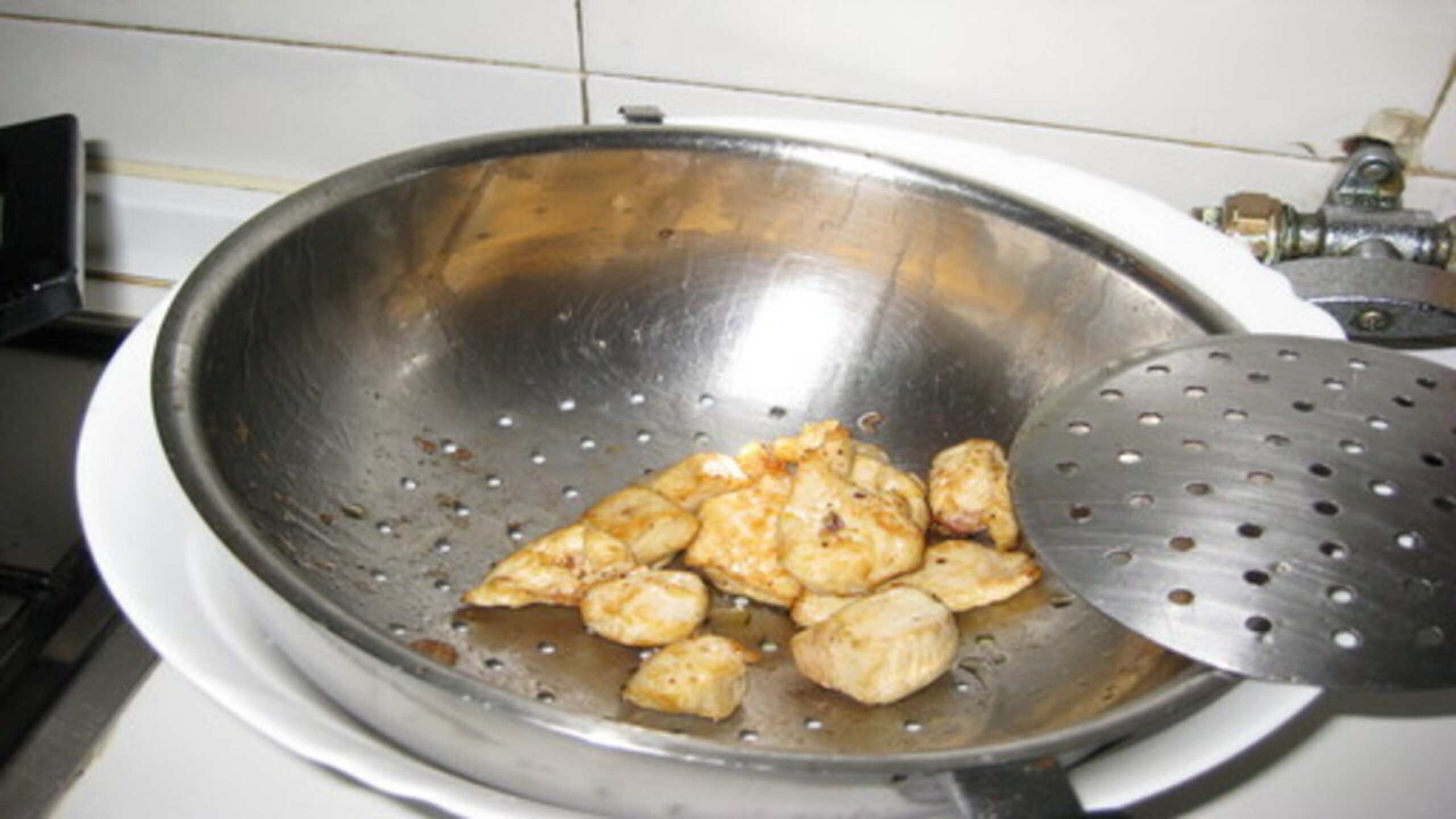
Step 5: Degrease chicken pieces
release the grease.
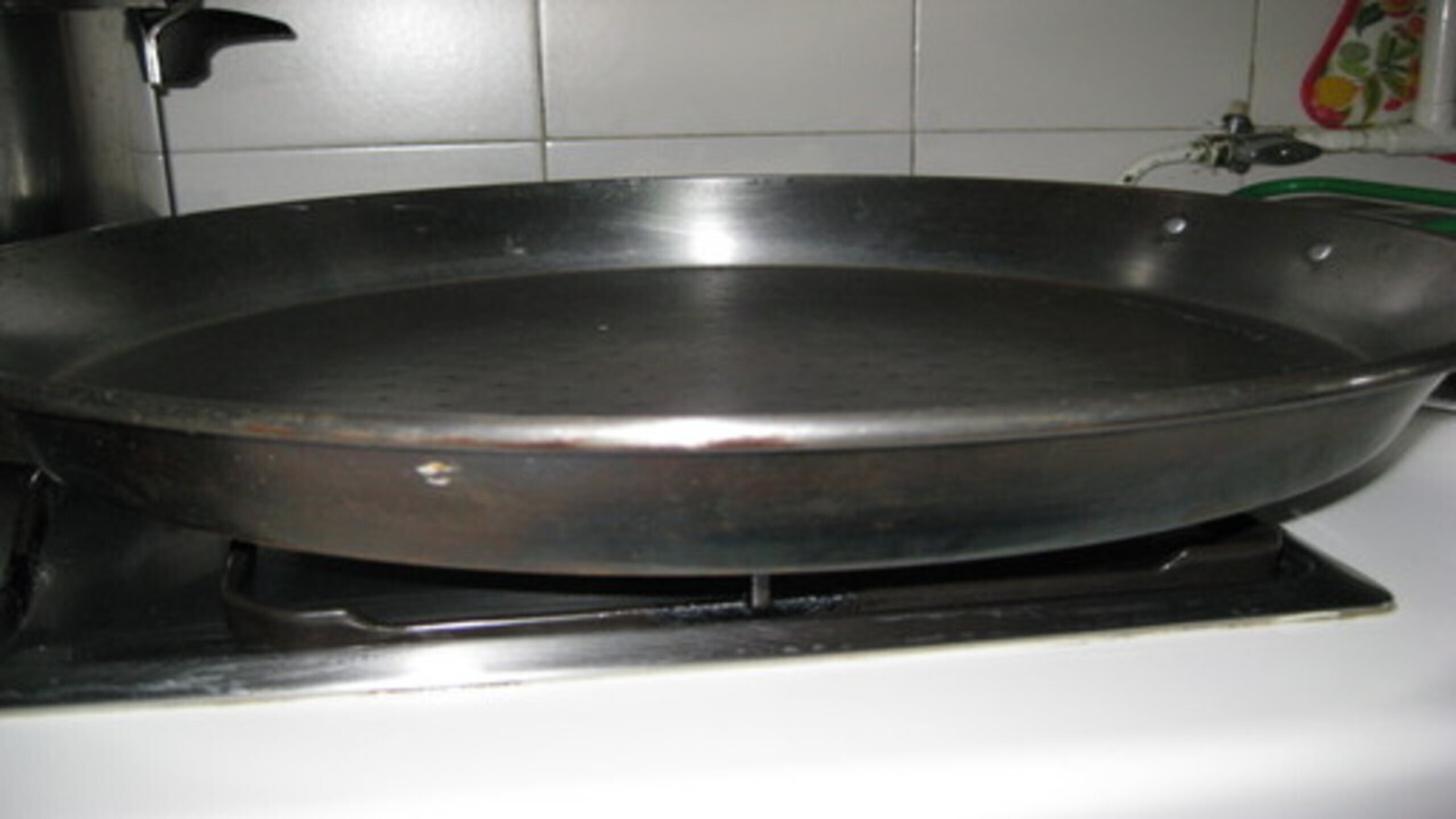
Step 6: The Paella, I mean the pan
One of the more characterictics items of paella is the pan, called it self Paella.
It´s needed that it has a wide surface and not very tall.
this permit the correct water evaporation.
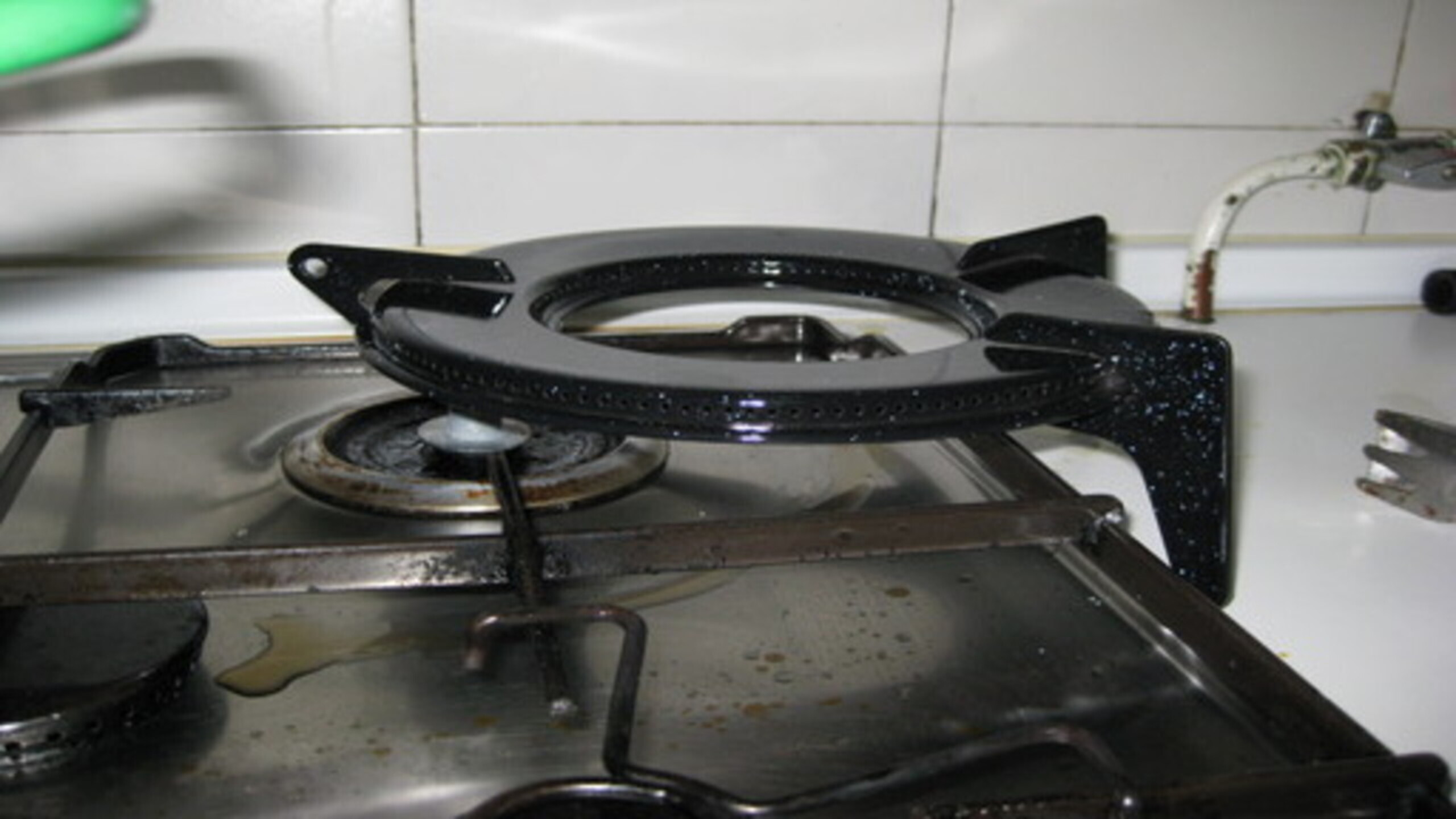
Step 7: Wide fire
A wide fire is needed, O any kind of surface providing fire. A wide vitroceramic or induction could do.
It obvious that heat must be as regular al possible for the whole Paella (pan)
Step 8: The rice
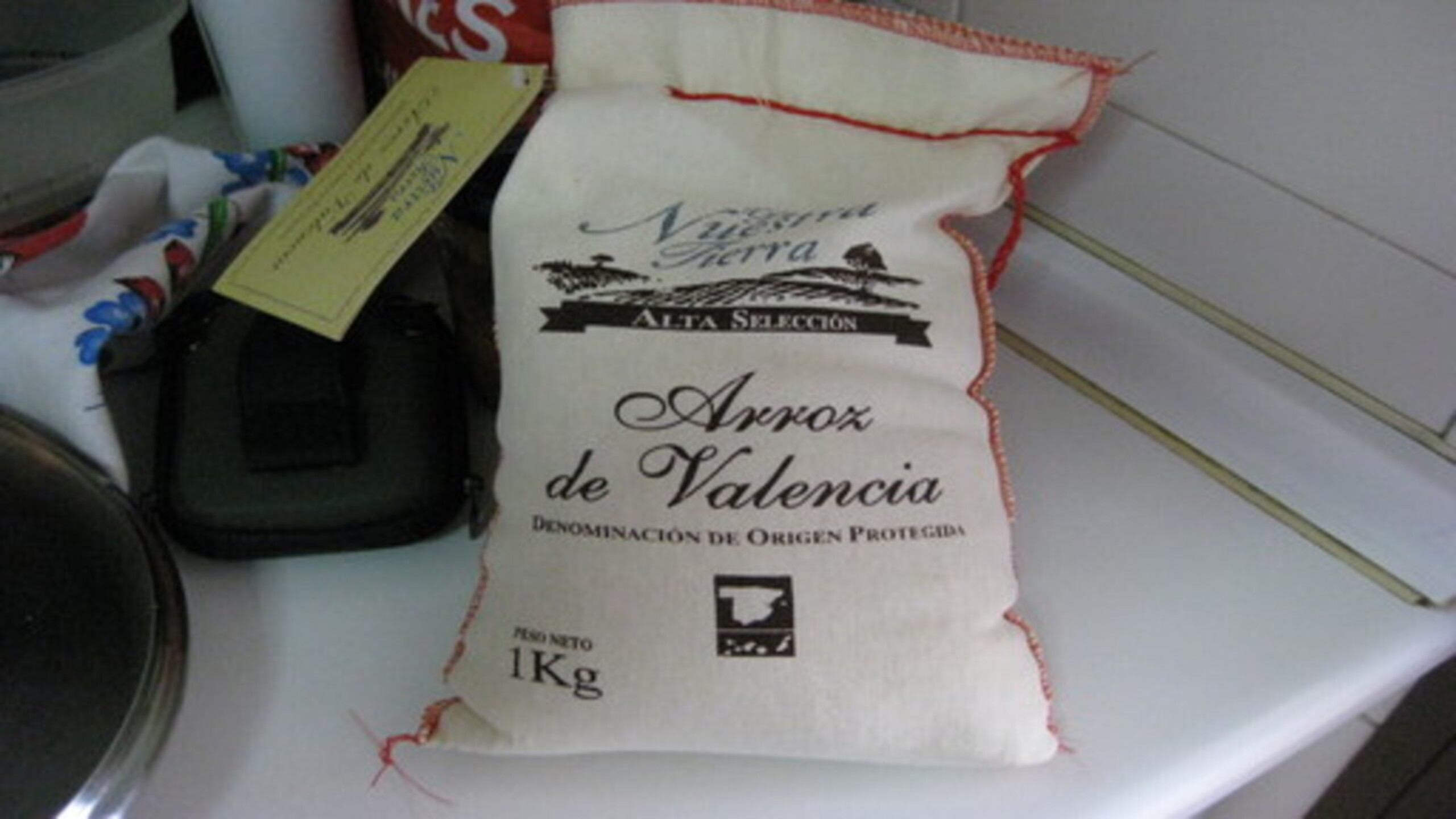
The rice, here a bag of it, from valencia it´s typical, you know paella valenciana , there are others as good as this.
Step 9: The rice
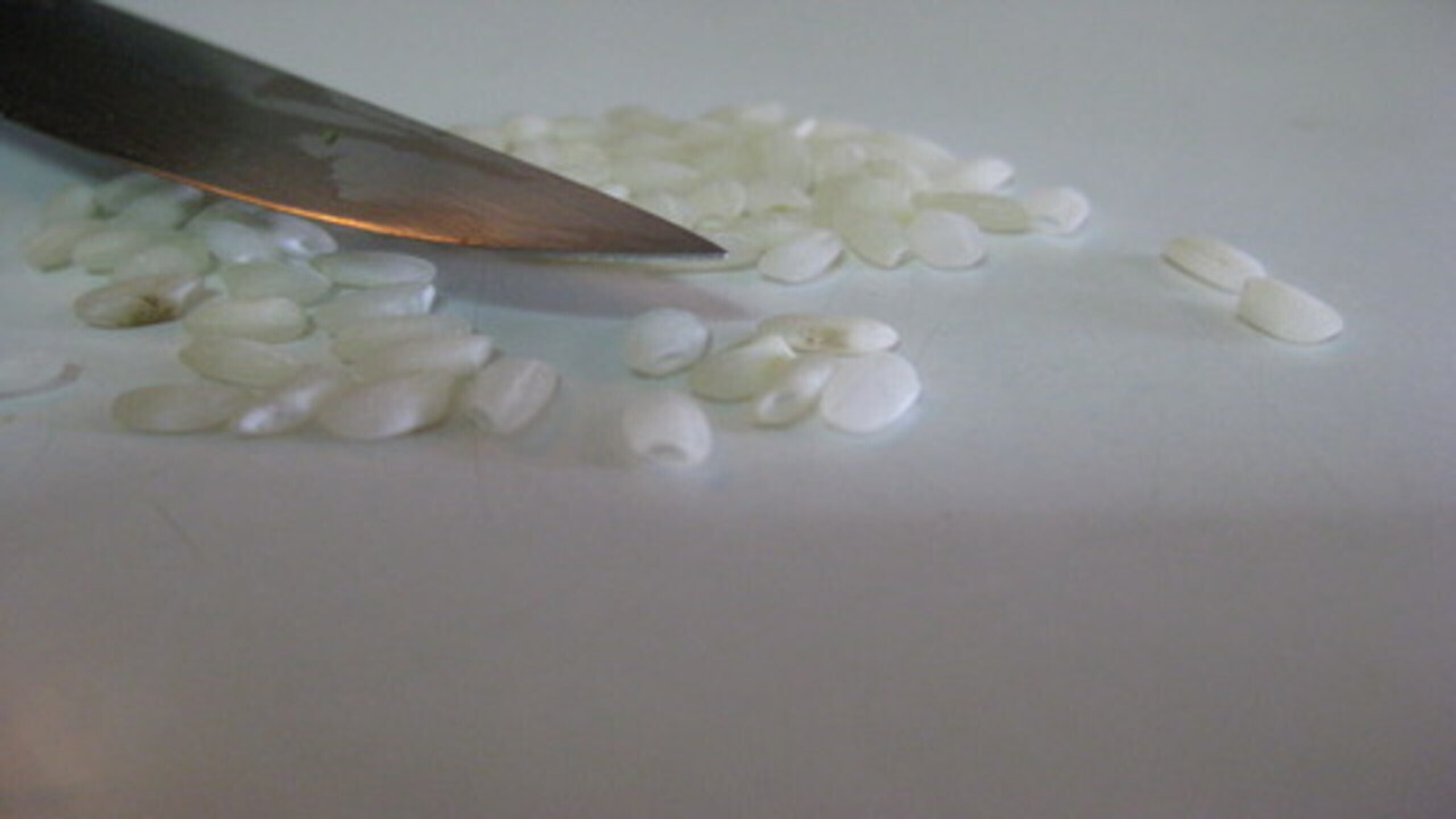
Watch this kind of rice, its important the type of rice, this is called rice Bomba, as it absorbs two o three times its volume in water.
It’s has not any kind of manipulation.
Look for it.
Step 10: Pooring rice into pan
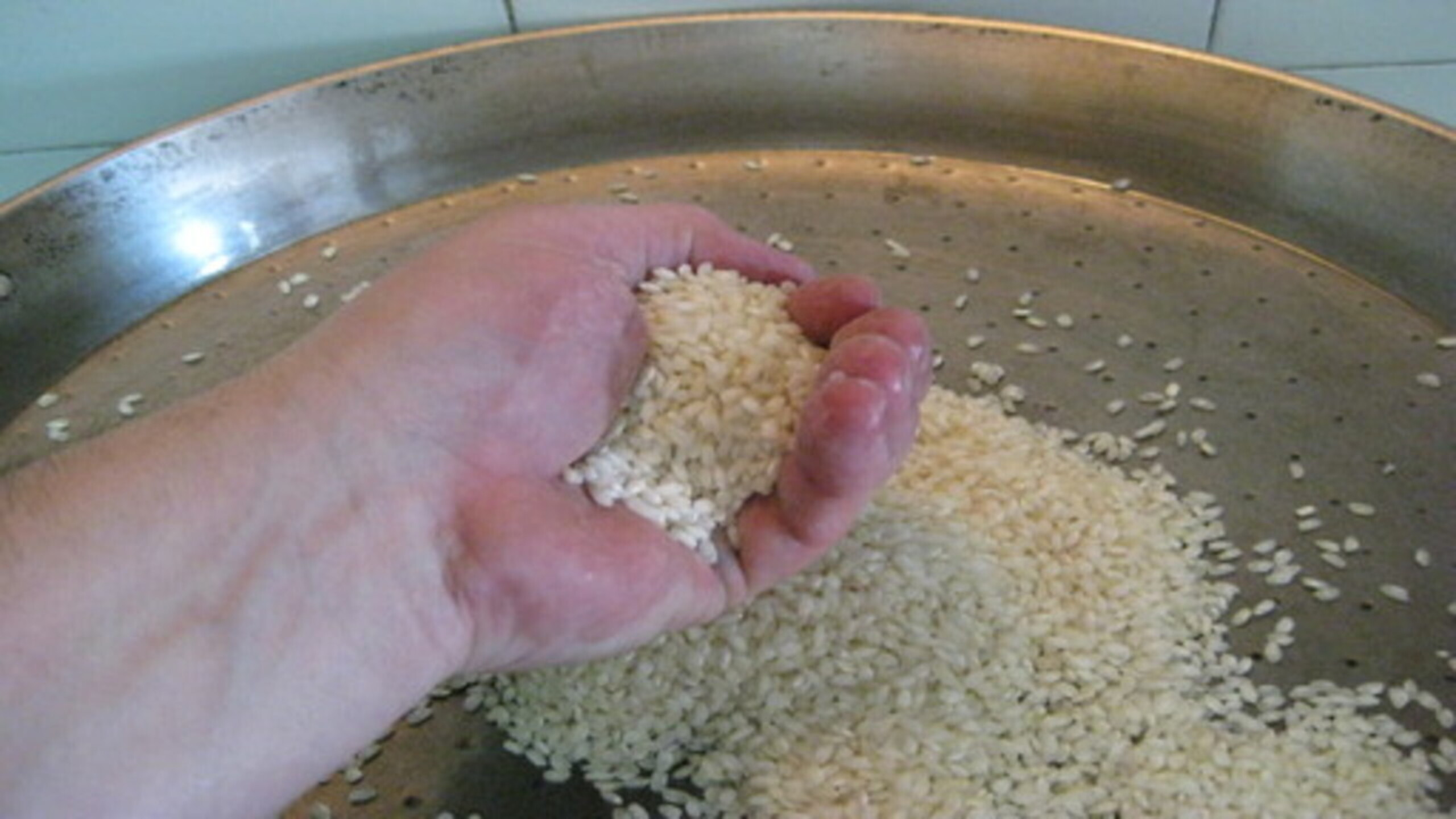
poor rice into pan, a hand full for person or 120 gr.
Step 11: pre cook rice
- 100 cc Olive oil
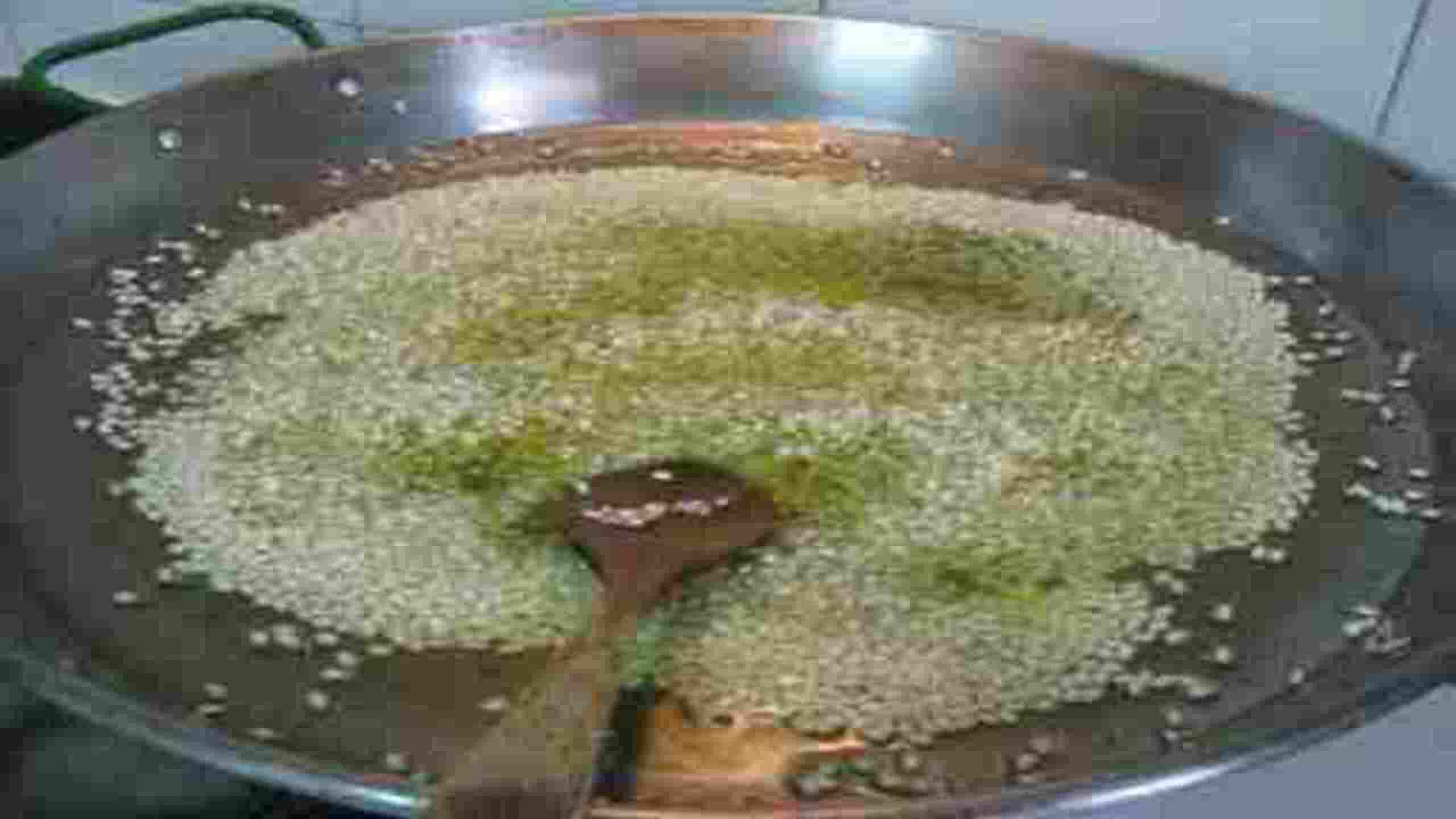
give a frying minute to the rice.
just to oil a bit. try no to brown the rice.
take out the excess of oil, leave a bit.
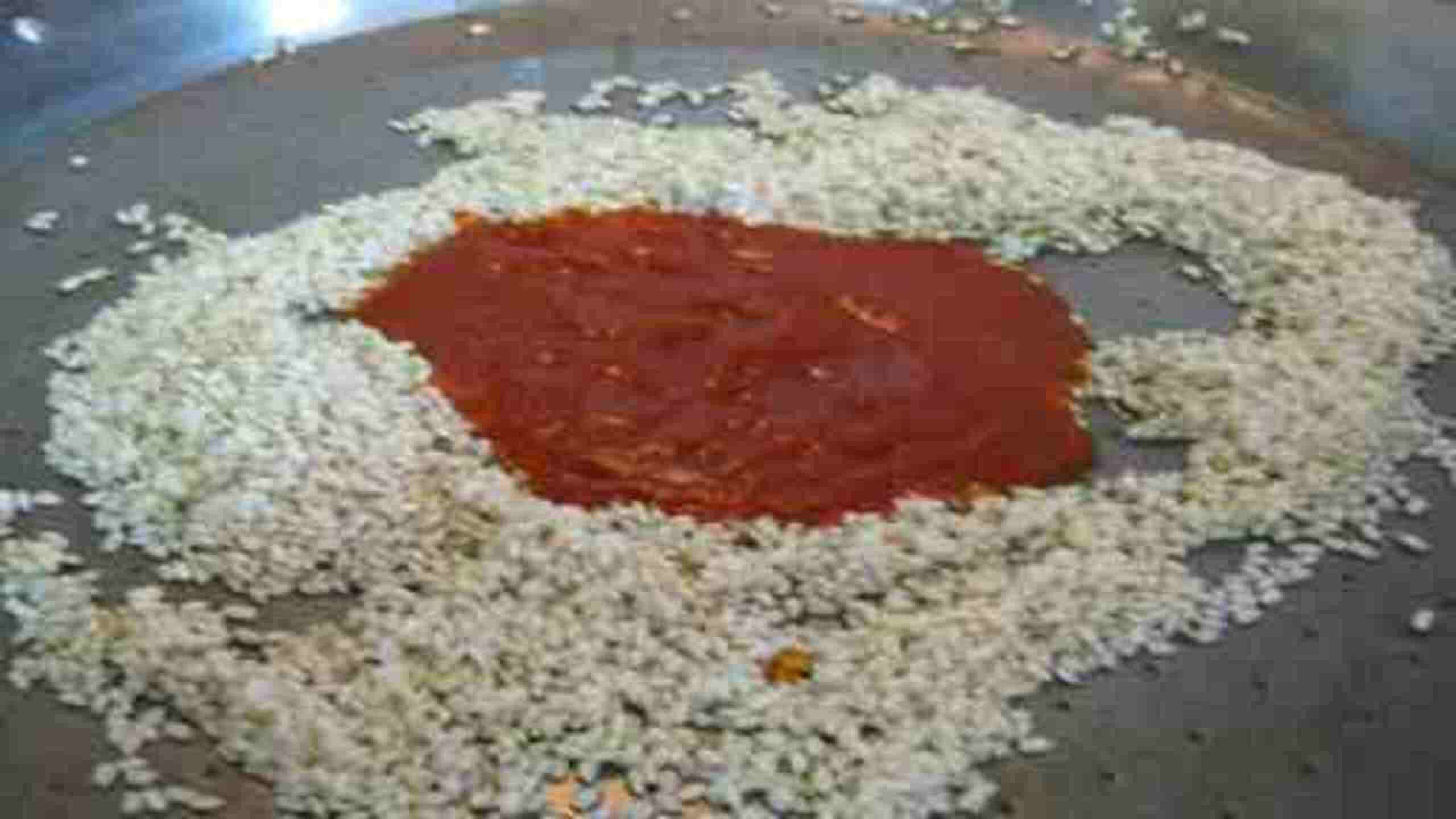
Step 12: Begining the show, all together
With medium fire, poor tomato into pan and rice.
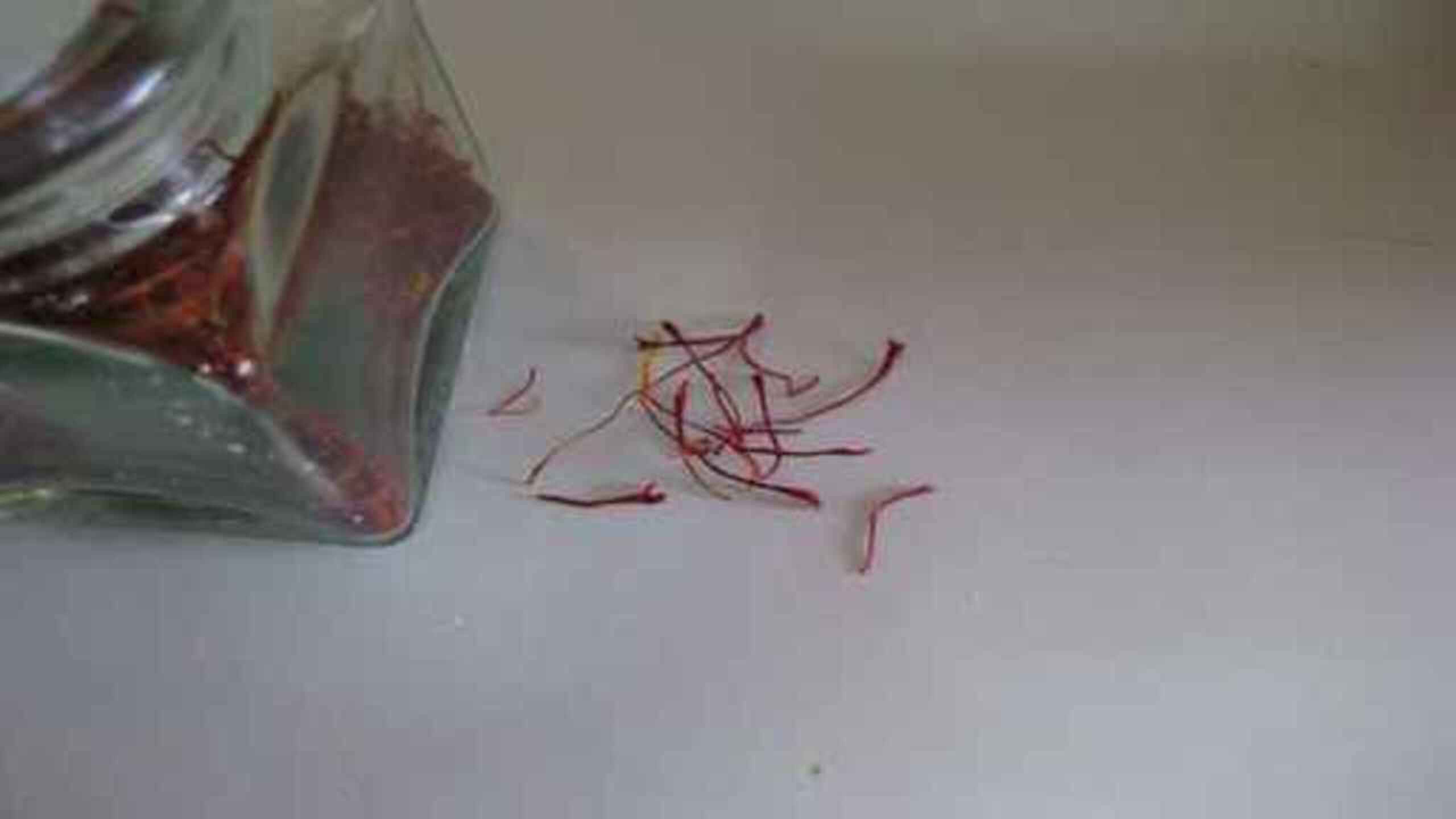
Step 13: Azafran, safron
- safron, a few debris
One of the most important ingredients, Spanish saffron, not other country,
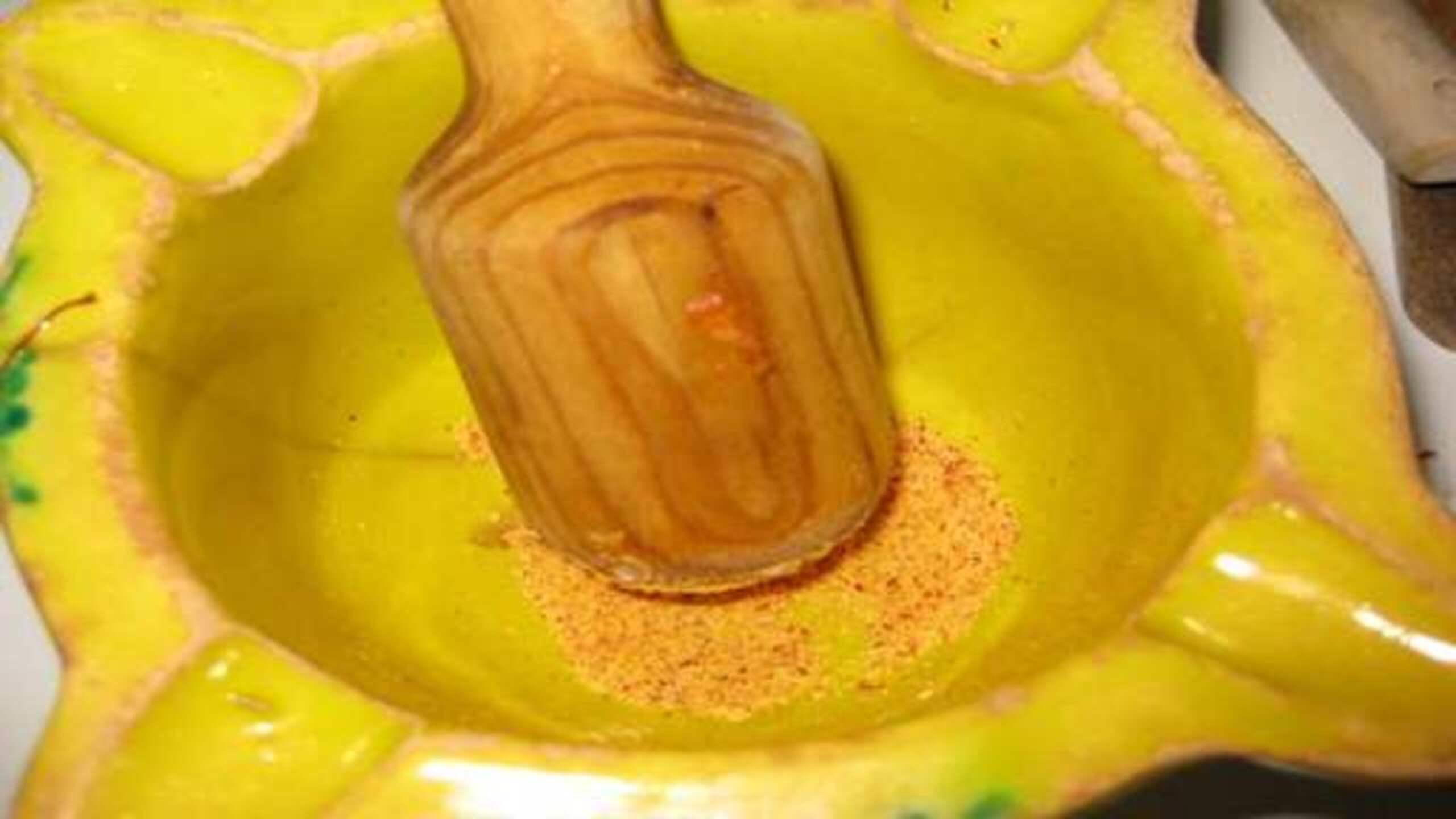
Step 14: Smash safron with salt
- a bit of salt
smash safron and salt it into powder
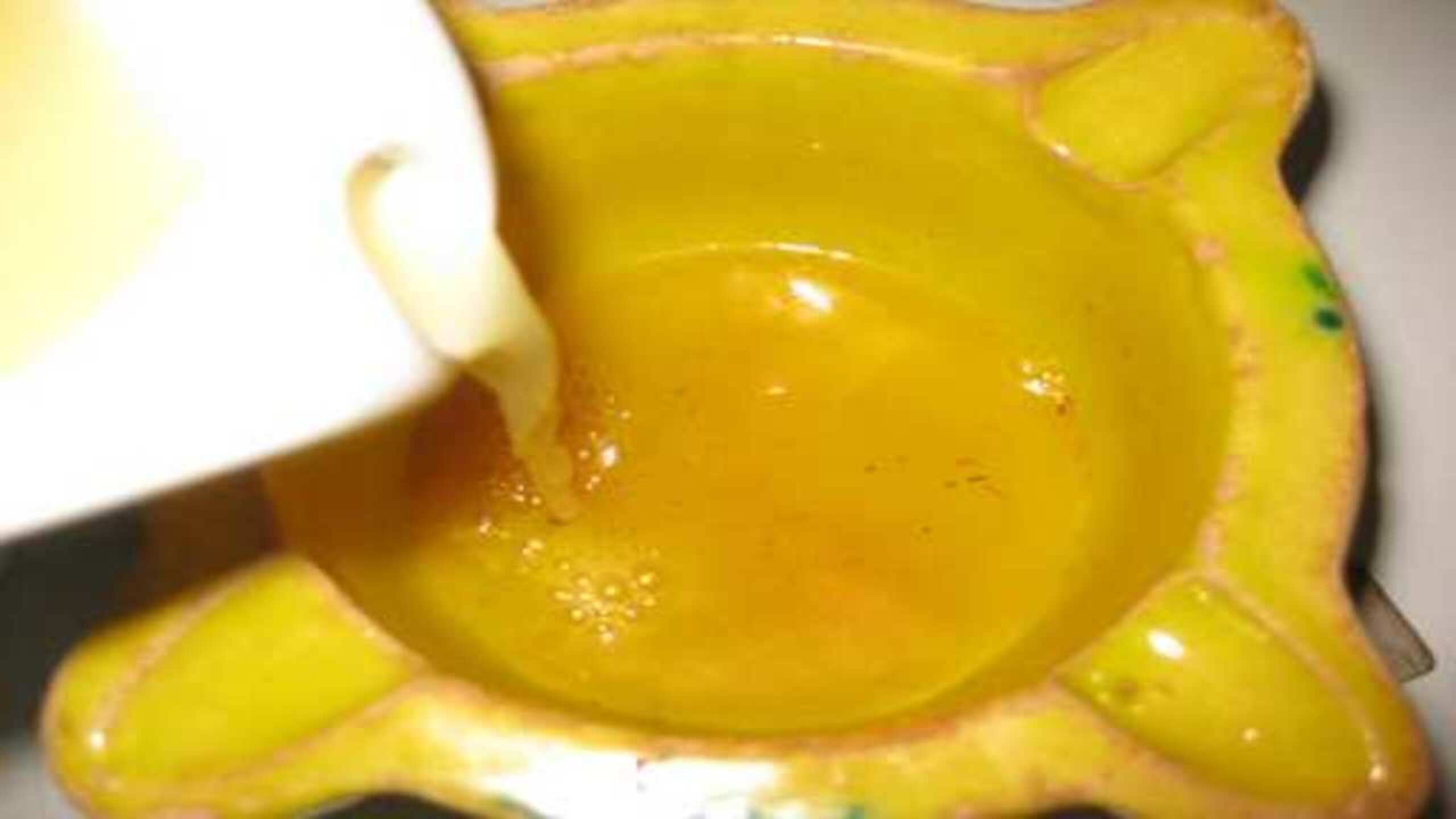
Step 15: safron and fumet
mess up saffron powder and a bit of fumet.
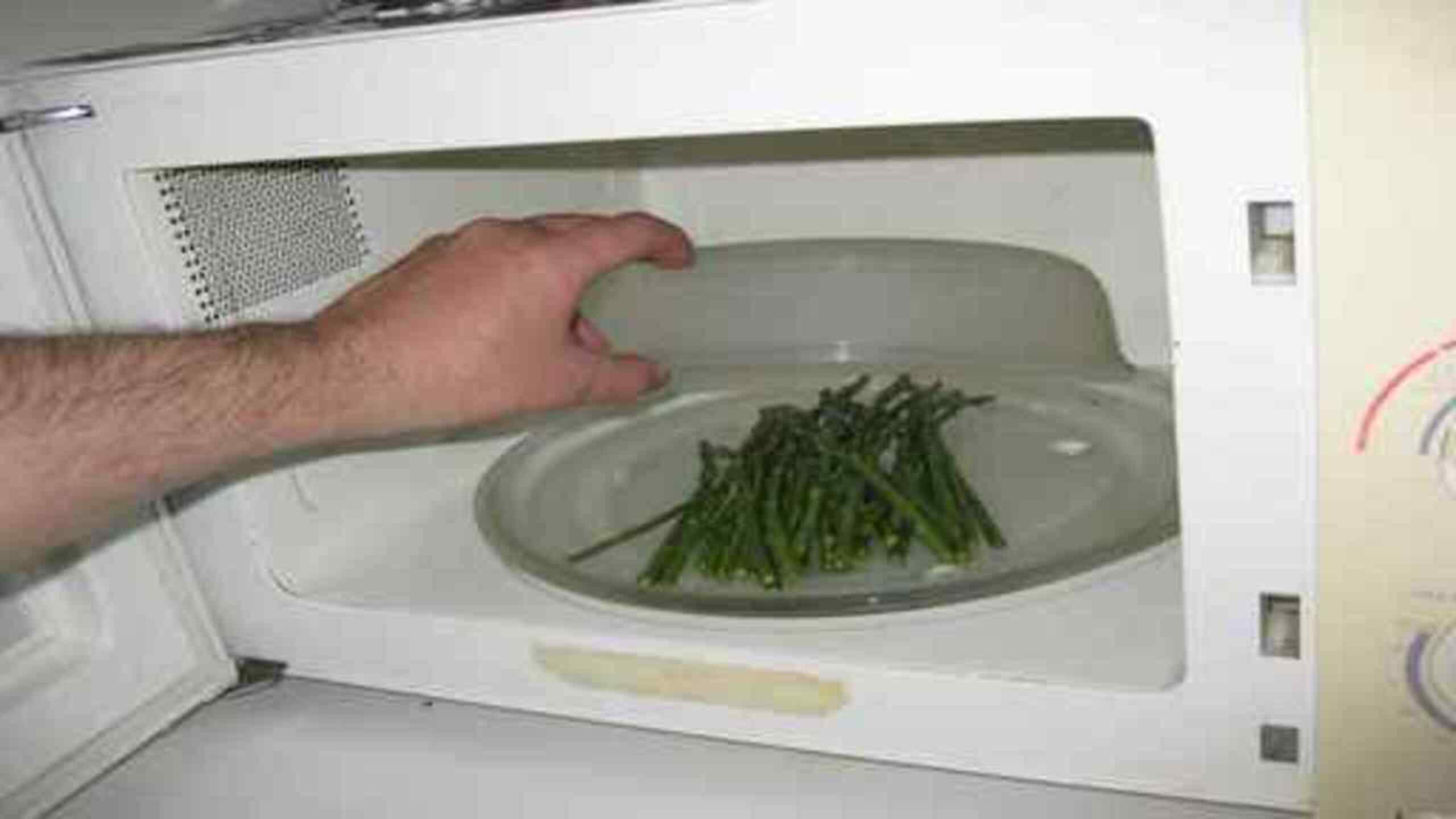
Step 16: preparing aspargus
give a minute of microwave oven, just to soft a bit.
Step 17: Pooring chicken into pan
Still with medum fire, watch not to burn ingreientes, poor fryied chicken.
give it a heat.
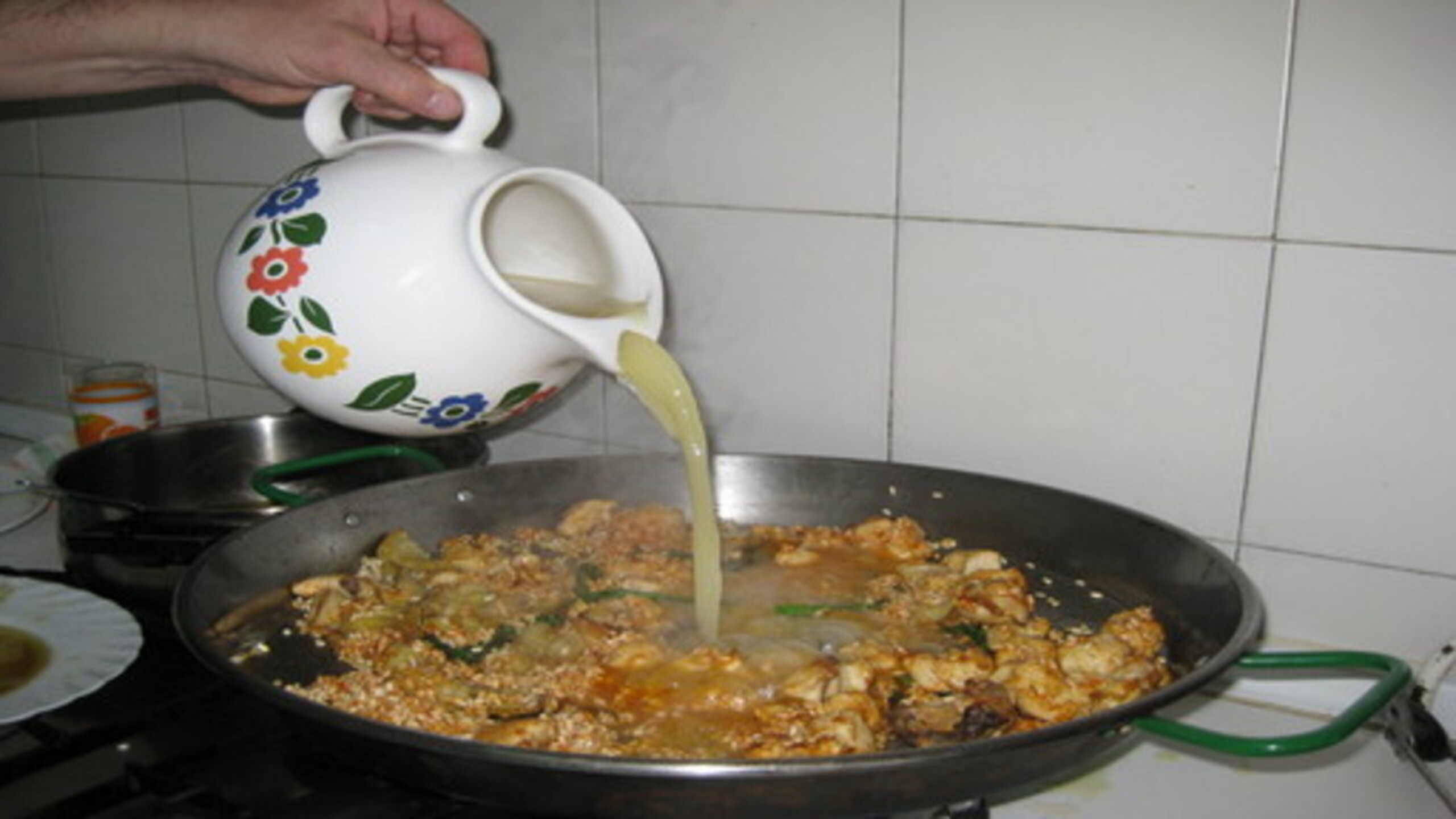
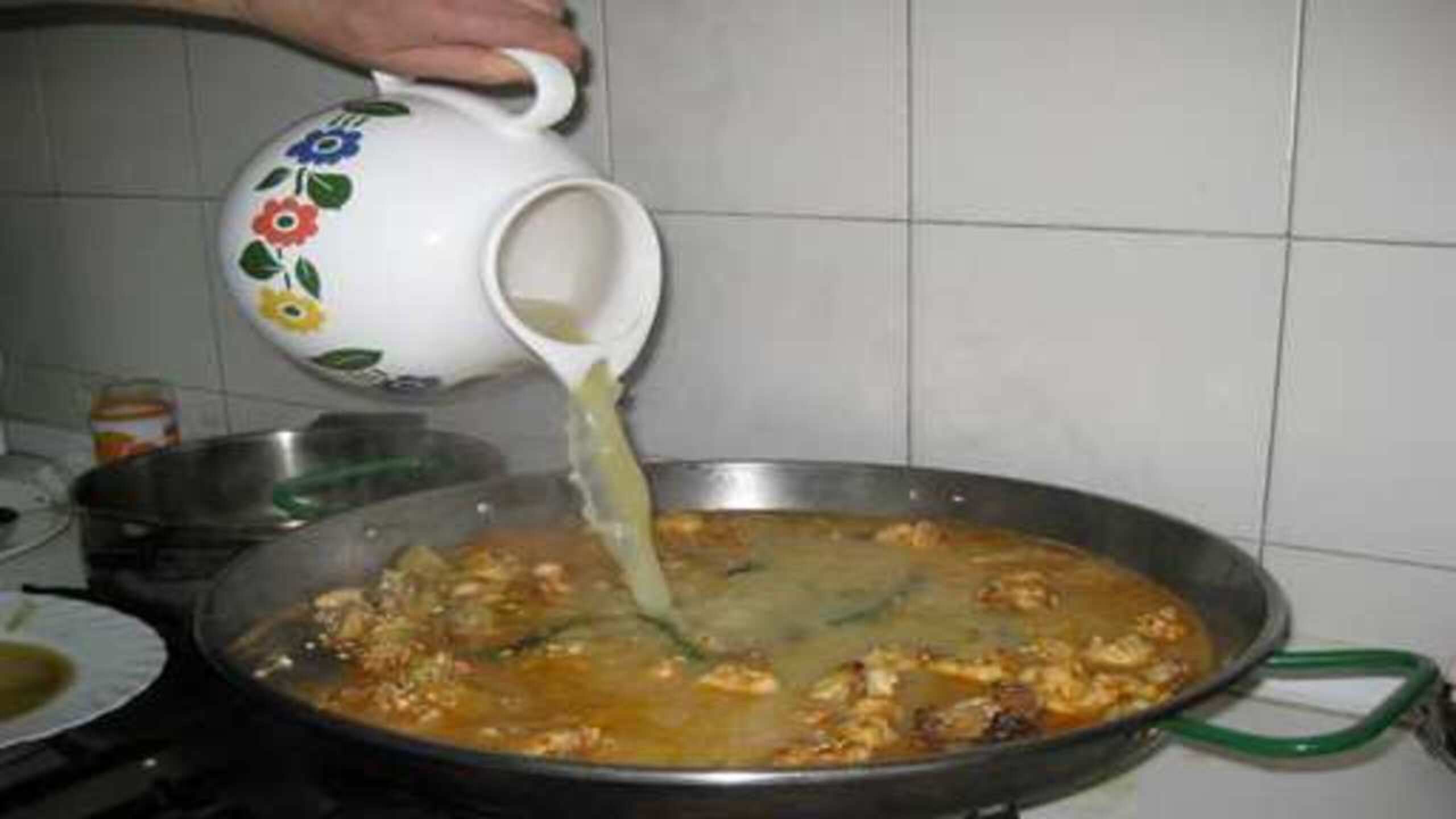
Step 18: pooring fumet
Have the fumet hot, boiling, 3 minutes at microwave if you keep it hot.
Previous to poor fumet put fire as hight as posible, hear thing complaining crick, prssf, chuff for a few secconds, here begins socarrat mistery.
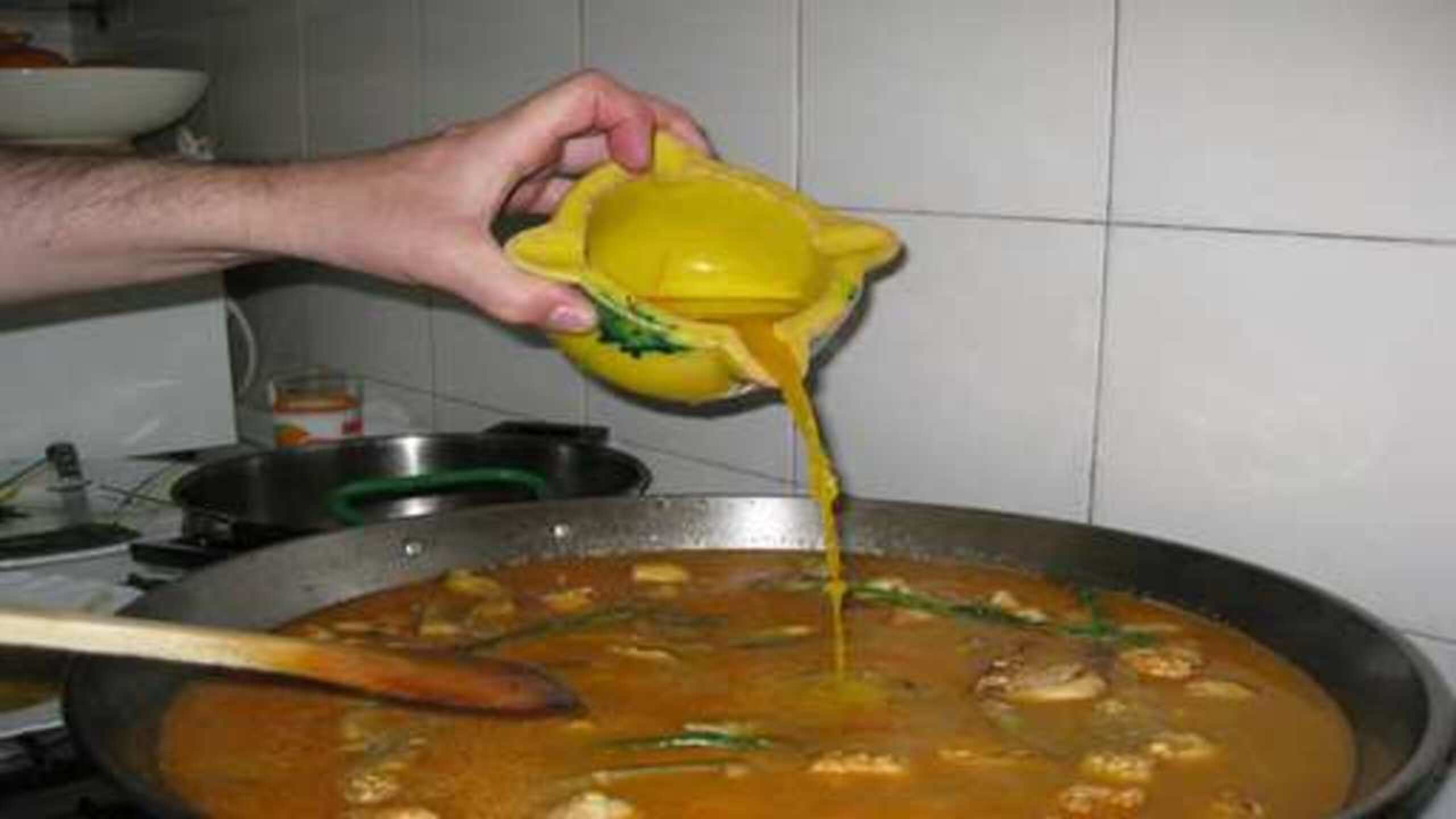
Step 19: pouring the safraon infusion
Just after fumet, pour safron infusion.
Step 20: No more playing, alea jacta est.
Now all ingredients are into pan.
give it a shake, last shake, just for leveling.
try to have pan as leveled as posible.
10 minutes, hard fire.
Step 21: after 10 minutes, salt time
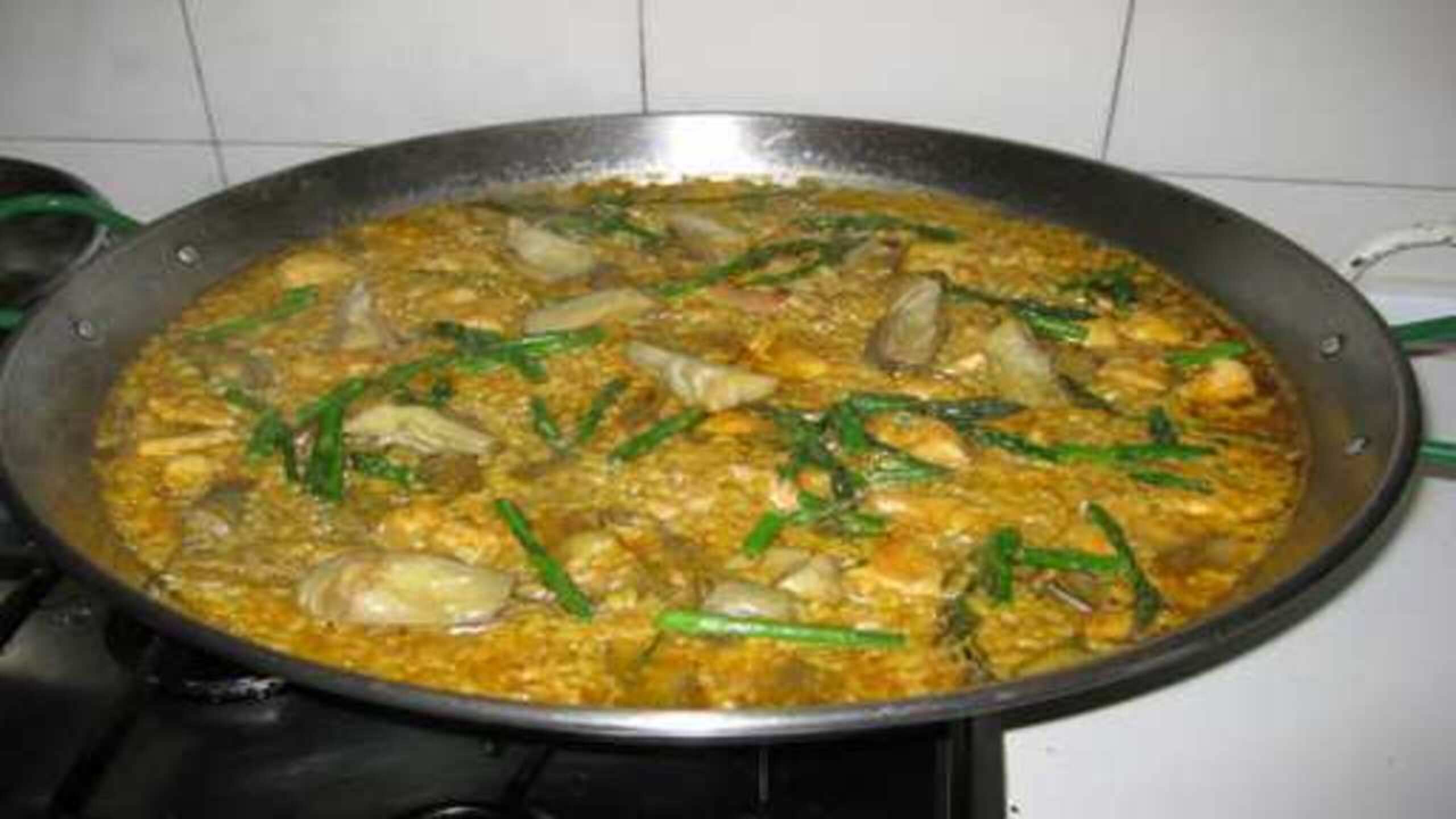
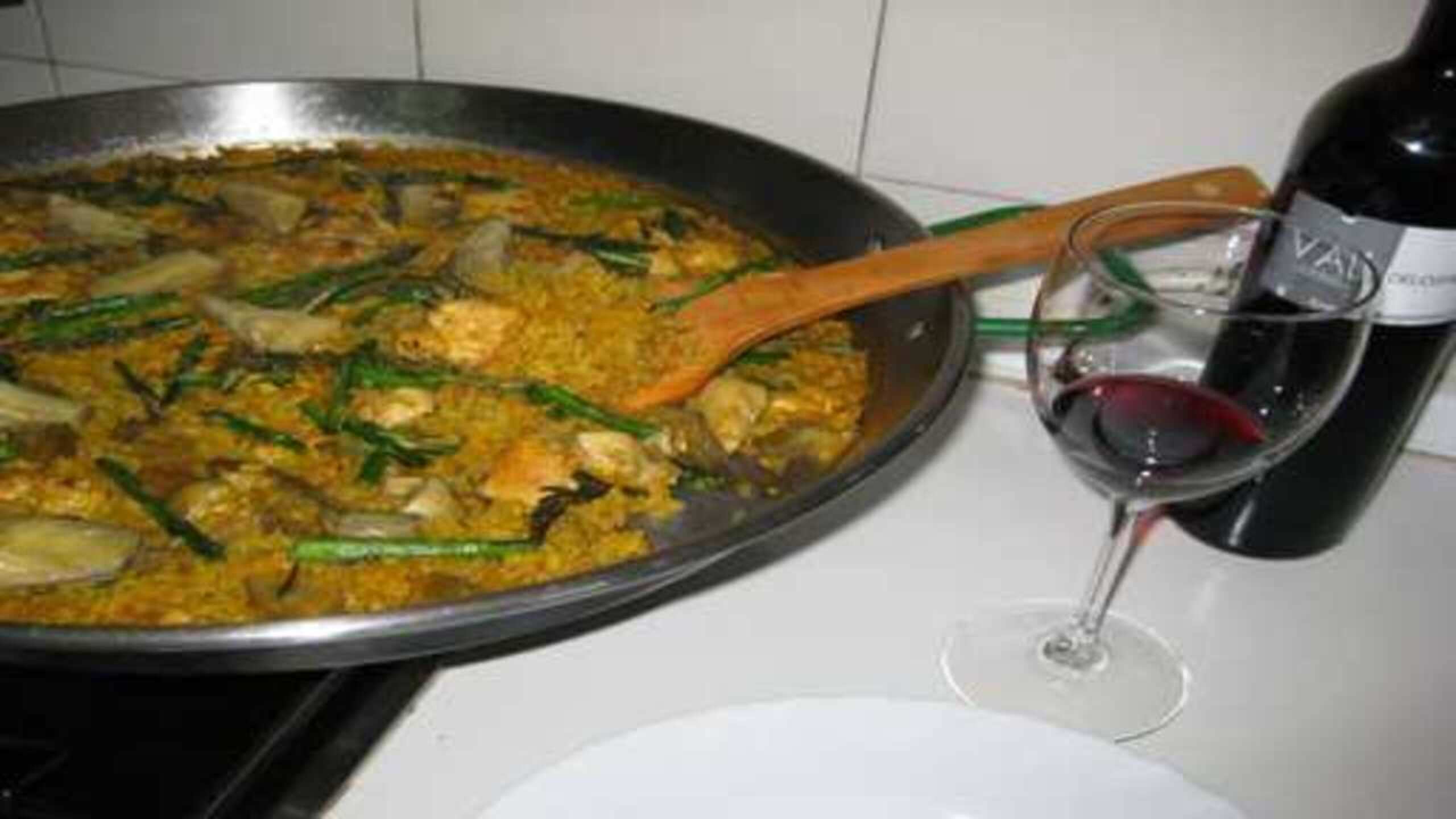
After 10 minutes this should be the view. If more water give it a few minutes with hard fire, if less water just pour a bit.
Taste for salt, if low give it a bit, think that still there is water to be evaporated, so think in concentration.
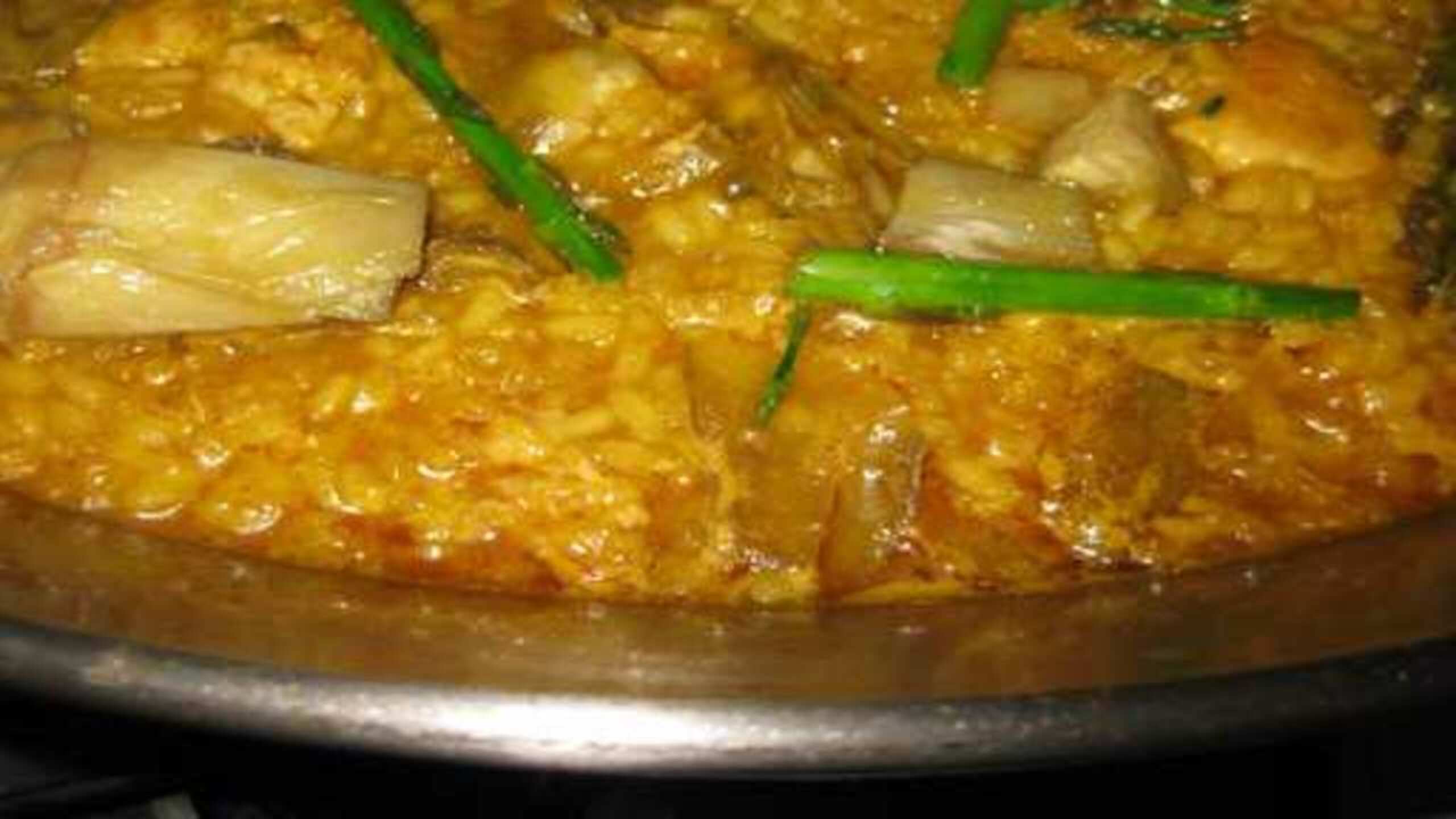
Watch the withe spot at inner part of rice, almos done. But still a bit hard.
This is the reference, exterior grains of rice must have this white spot, inner ones are more coocked. be careful.
Now, reduce fire to the minimum that keeps a bit of boiling at center of pan: chup,chup, chup.
Keep it for 5 minutes.
Step 22: Almost done
Another vew of this step, still 5 minutes, low fire.
Step 23: Finaly,
When water is not visible, give hard fire for a minute, smell it for not burning it and hear it “criping” and “chuffing” just try to get the down side rusted, almost burned, this is the socarrat.
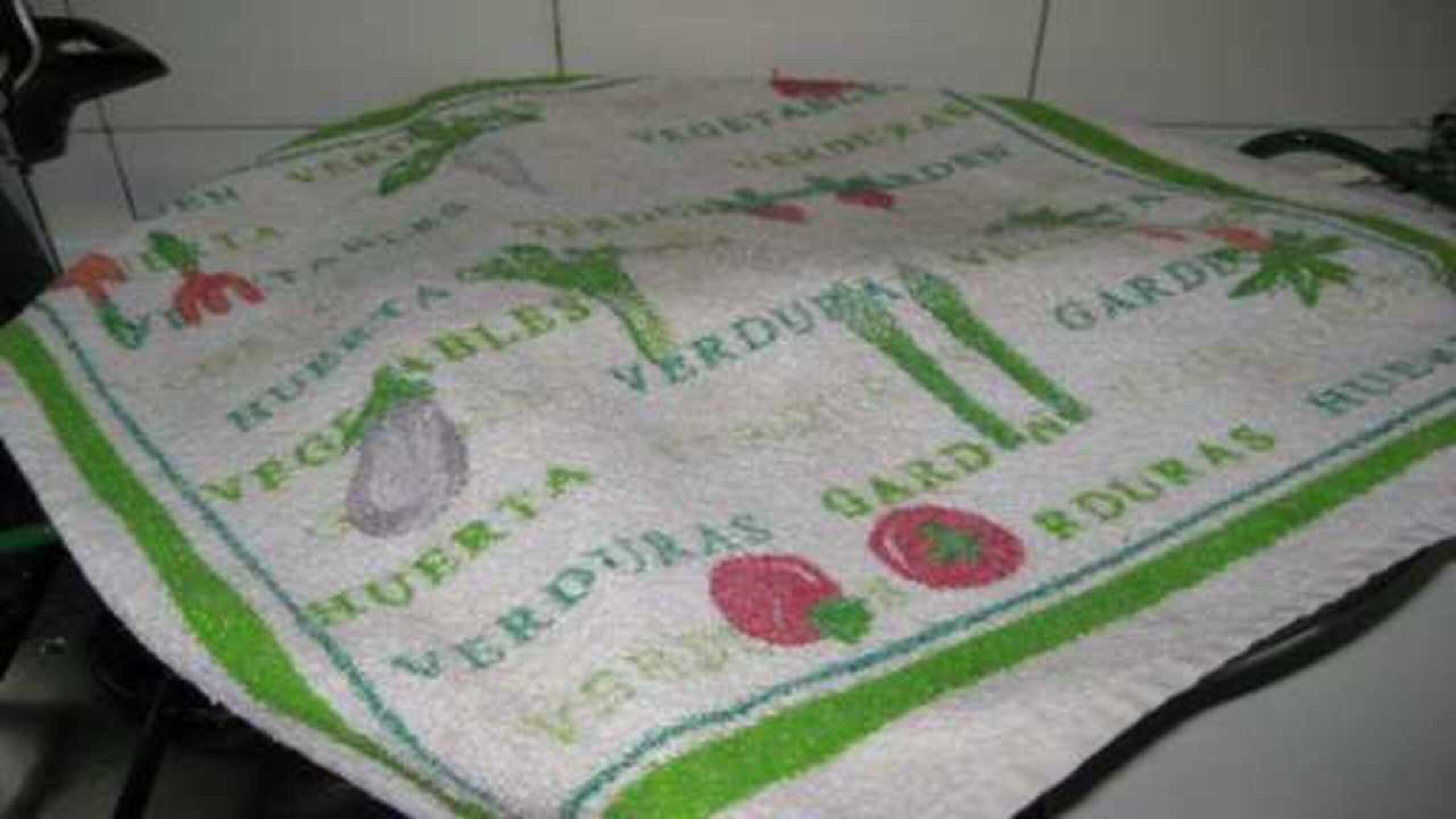
after this, cover with a piece of cloth to absorbs excess of mist,
5 minutes covered,
Step 24: Serve it.
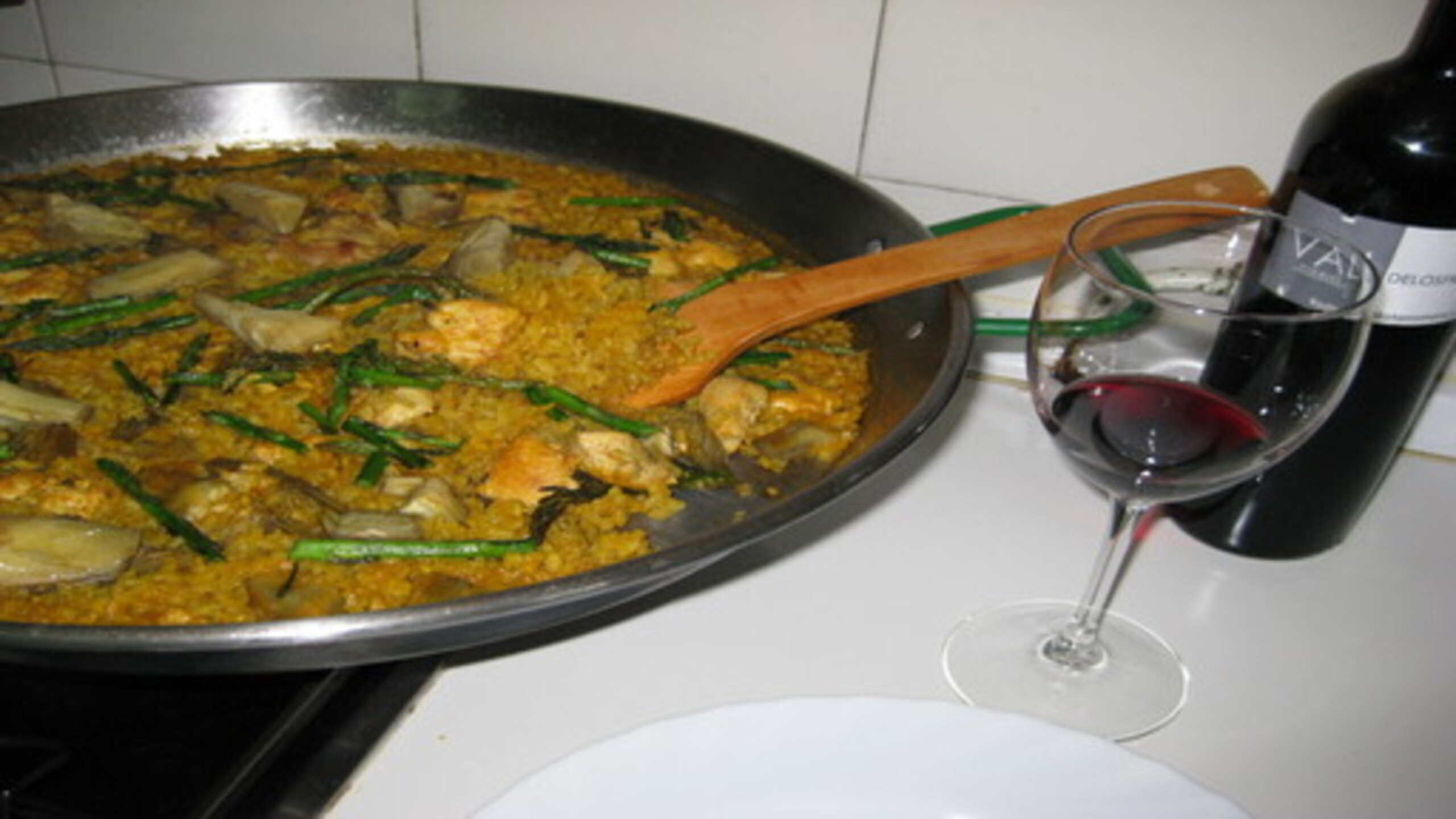
With a plane spoon, try to scract from bottom of paella, rising some socarrat. mix diferent parts of paella for every dish.
A young red wine, full of color and body, malotactics or carbonics and no or very few time of wood, is suitable for this paella rice with chicken
buen provecho.