
Chef's Notes
In some areas, whole mustard seeds are found at open-air markets. Many grocery stores will sell the seeds in the spice-bulk area, or in small jarred portions. The shelf life of mustard seeds is between 3-4 years. Stock up and store in an airtight container.
Step 1: Preparation
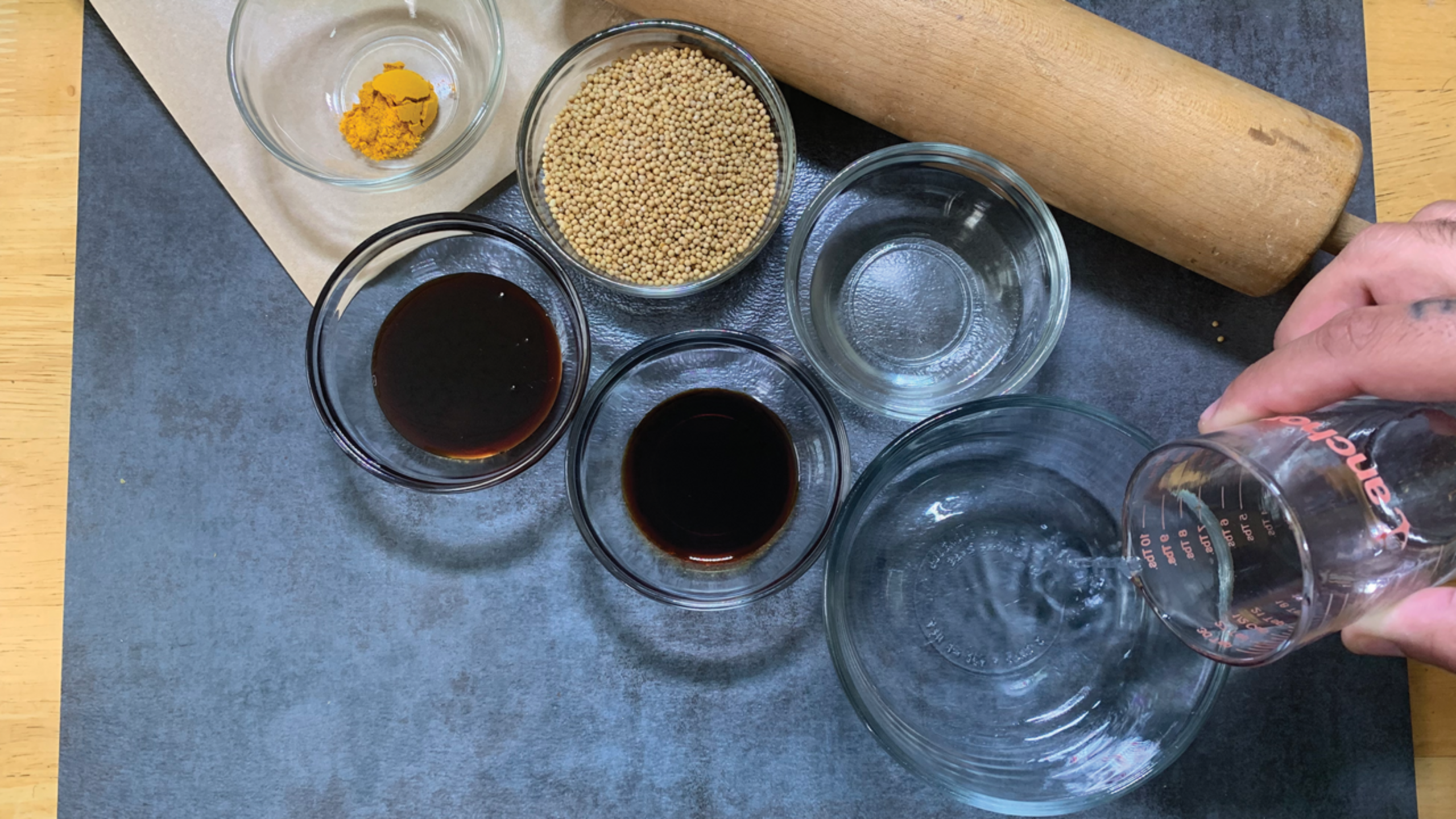
- 6 tablespoons of yellow, brown or black whole mustard seeds
- 3 tablespoons of white wine vinegar
- 2 tablespoons date or maple syrup
- 3 ounces of water, hot or cold
- 1 teaspoons ground turmeric
- ¼ t sea salt, or to taste
Prepare and portion the mise en place. Use a mortar and pestle. In place of a mortar and pestle, mustard seeds can be placed in a plastic bag where a rolling pin or wooden mallet can be used to crush the mustard seeds. A spice grinder also works to break down the seeds. A coarse powder will develop with all methods. Prepare for a workout if crushing the seeds manually.
Prepare to crush the mustard seeds to the consistency of a coarse powder. Set aside.
In a small mixing bowl, add all wet ingredients and salt, and whisk well. Make certain that all ingredients are dissolved well.
Add ground mustard seeds to the liquid mixture, and stir well. If the mustard appears too loose, continue to stir. A thicker texture will develop from stirring.
Transfer to a small jar, cover, and store refrigerated overnight for best results.
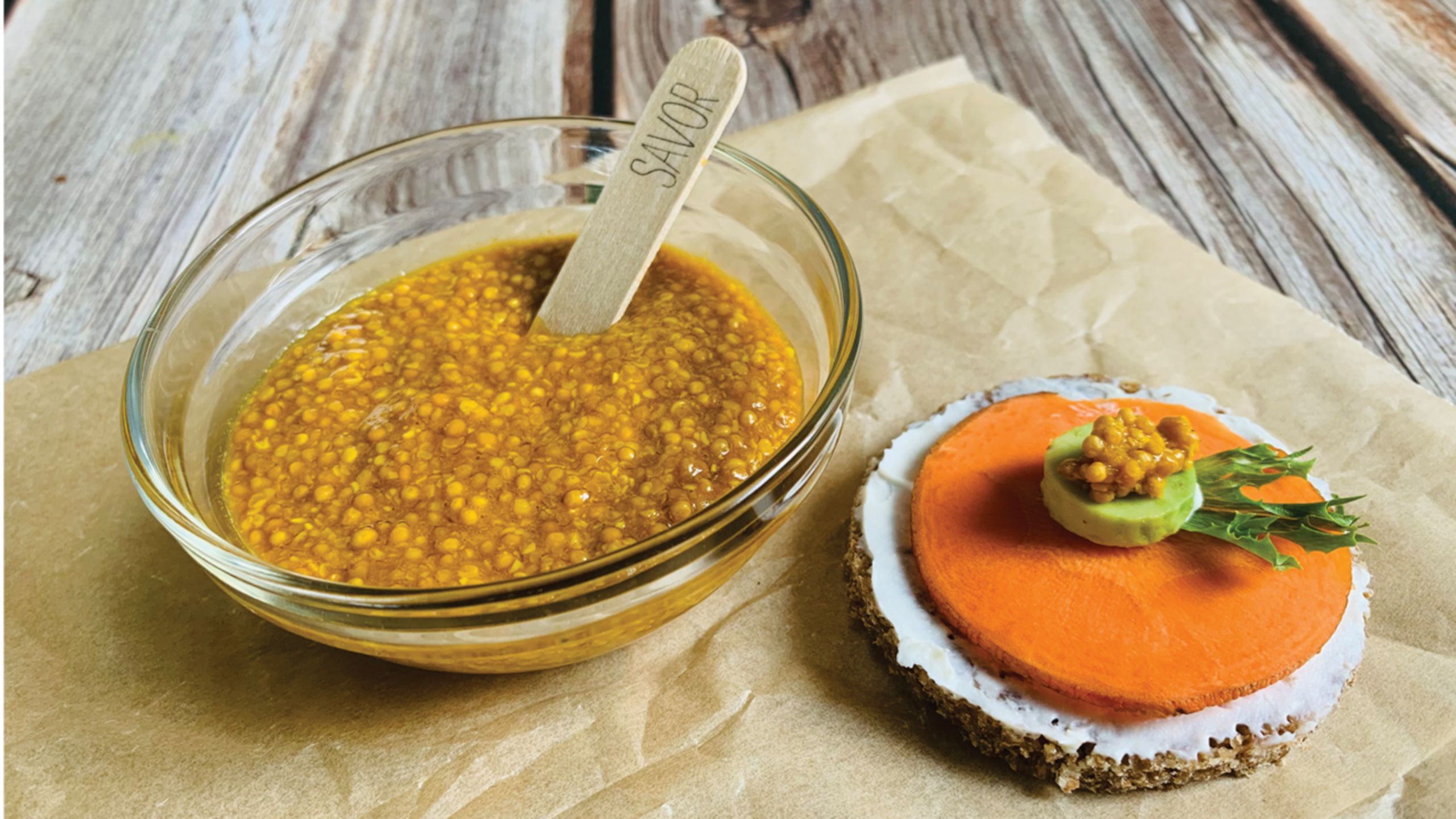
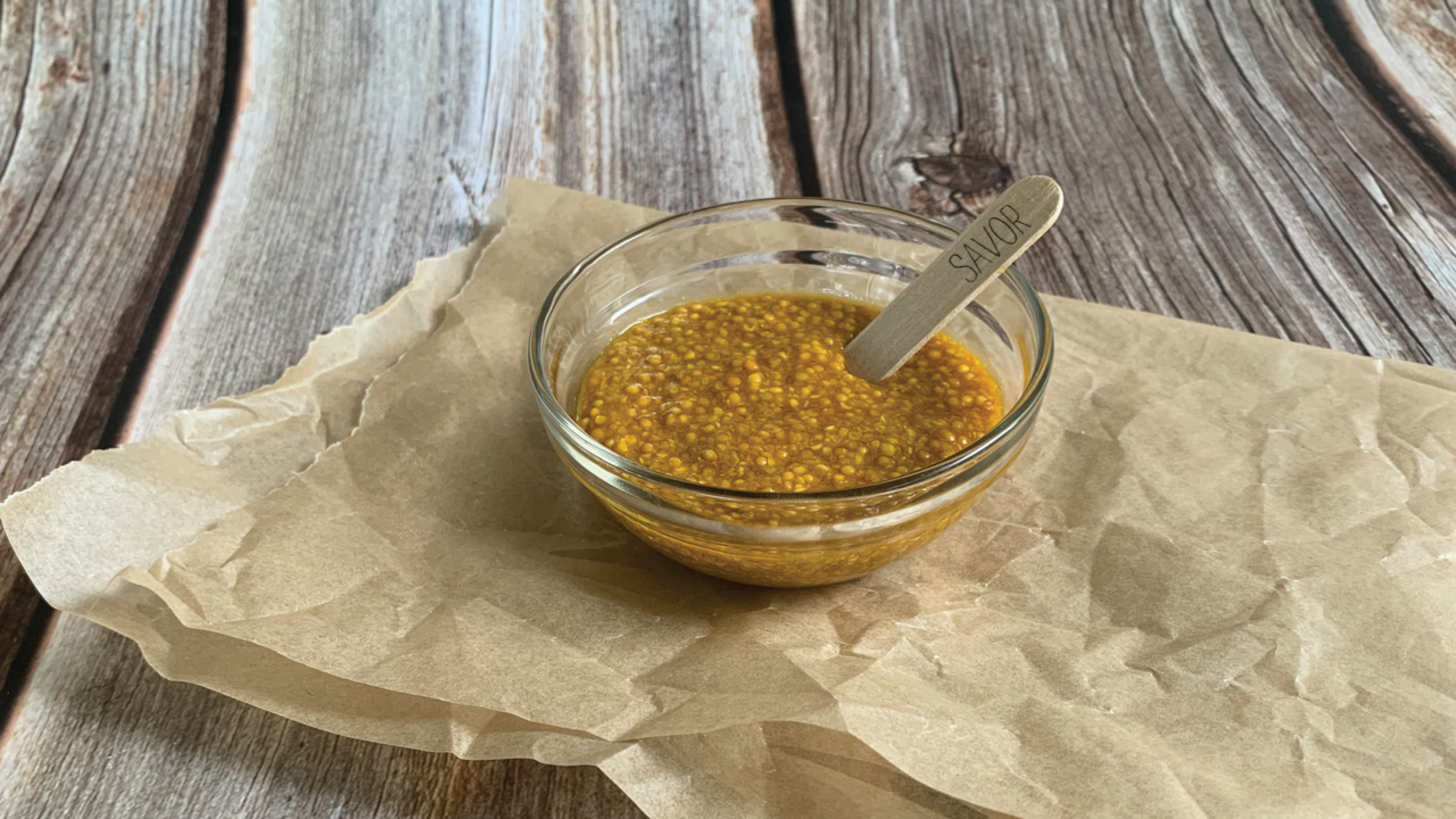
Magically, the mustard will appear creamy in consistency.
NOTE: the salt can be exchanged for 1 t of low-sodium Tamari
Step 2: Serving the Stone Ground Mustard
There are endless possibilities in using homemade, stone ground mustard. Not only is it a lovely sandwich spread, it also serves as a decorative and colorful garnish to any dish or small bite. Many enjoy using mustard to accompany a crudites platter.
Step 3: Storing
Small, glass jars with a vacuum seal will work best for maintaining the freshness of the mustard.
With time, additional vinegar, in scant amounts can be added to make the texture smoother.
Mustard will last up to five days in the refrigerator.