Step 1: Prepare the Vegetables for Braising
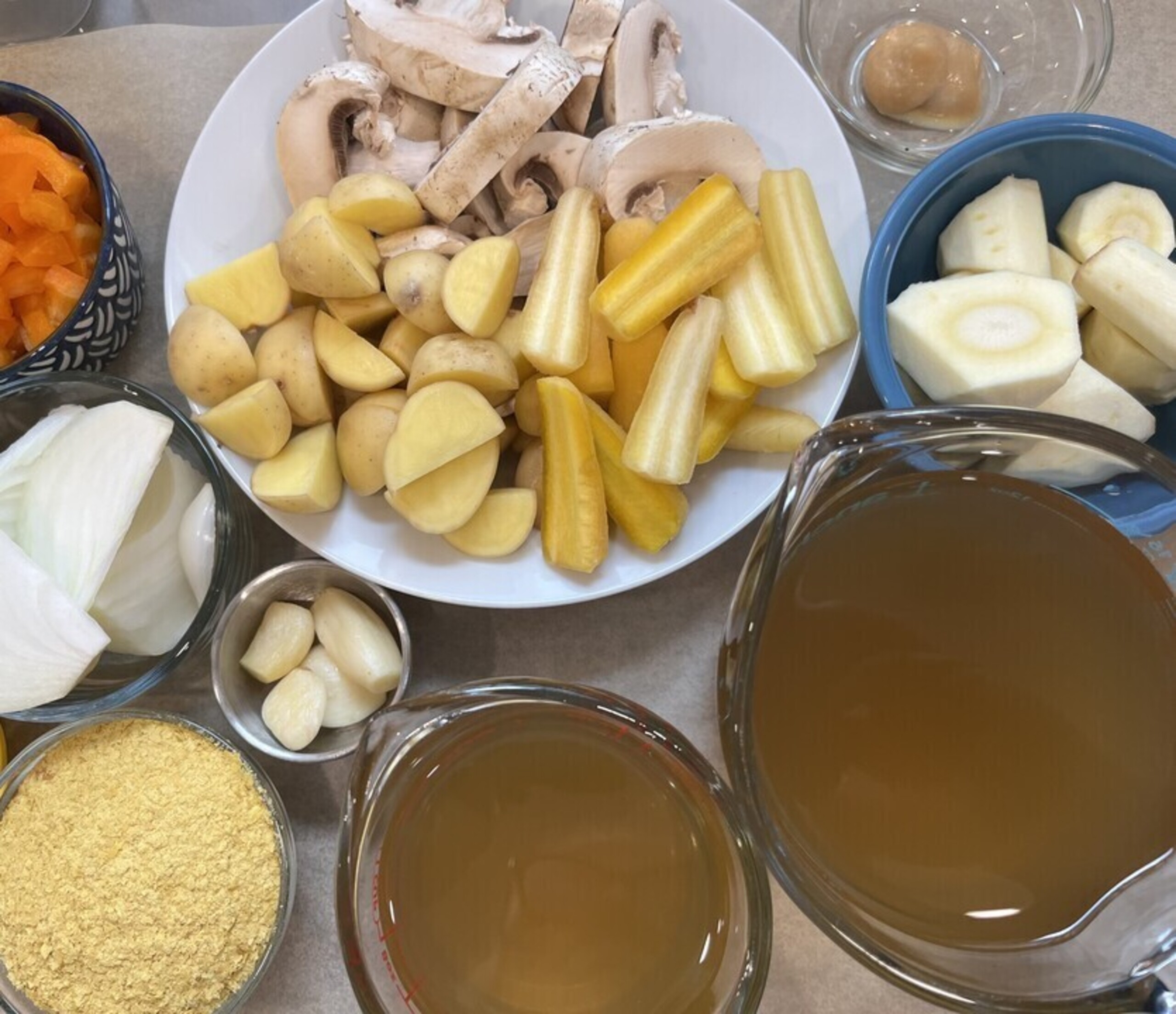
- 1 medium carrot, sliced into chunks (about one cup)
- 1 orange pepper, in chunks or diced
- 3 medium-sized mushrooms, sliced into ½” pieces with stems
- 1 cup of quartered, golden potatoes (leave skin on)
- 1 small parsnip, peeled and cut in large chunks
- 1 medium-sized yellow onion, cut into chunks
- 4 -6 garlic cloves, whole
- 3-4 cups of low-sodium vegetable broth
- 2 tsp of white or yellow miso paste
- 2-3 teaspoons of tamari or soy sauce, adjust flavors if needed
- Pinch of ground turmeric (this will add color)
- Pinch of ground paprika (not smokey)
- Fresh parsley, about ten stems, wrapped with cooking twine.
Preheat the oven to 350°F (175°C).
Cut vegetables into large, uniform pieces (they’ll shrink slightly).
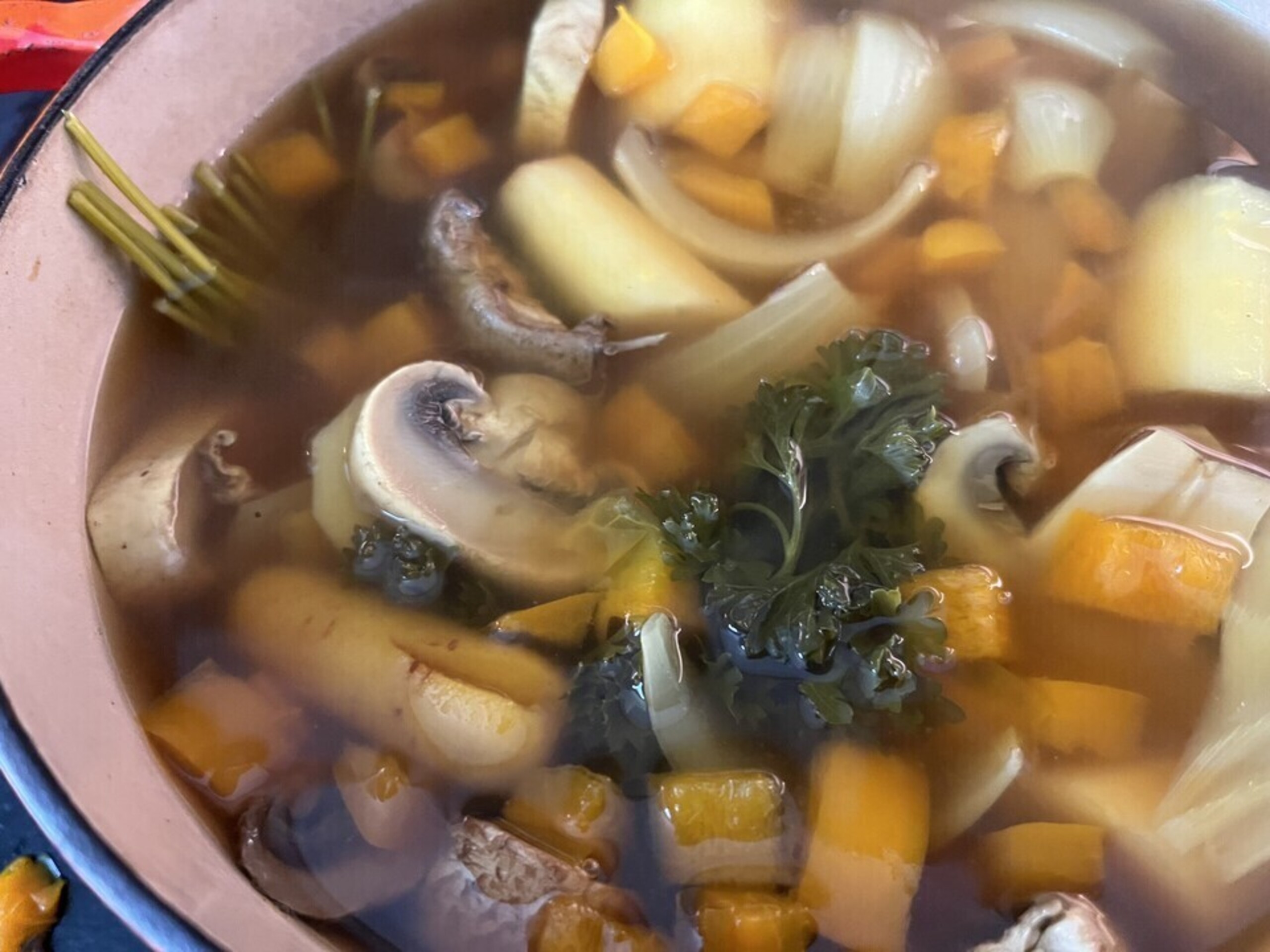
Layer the vegetables in the Dutch oven, it should be a “tight fit.”
Add Vegetable Stock
Pour in just enough liquid to come about 1/3 to 1/2 up the sides of the vegetables. Do not fully submerge the vegetables.
Cover Tightly
Use a lid or piece of foil to cover the pot well. This will allow the vegetables to steam perfectly and develop incredible flavors.
Place the covered pot in the oven, on the middle rack. Braise until vegetables are very tender—this usually takes 45 minutes to 1.5 hours. To add some caramelization to the braised vegetables, uncover the pot for the last 10–15 minutes–this will render a deeper flavor, as well as caramelize a bit.
Check for doneness by using the tip of a knife. You want soft, but not mushy vegetables.
Step 2: Finishing the Vegetables
- Juice of one fresh lemon
After braising, add the juice of one fresh lemon to layer the flavors and add a brightness to the vegetables.
Drain the stock from the braised vegetables and place the vegetables into a bowl. Reserve the remaining stock. Remove the parsley.
Reserve one cup of stock.
Step 3: Make the Vegetable Sauce
- ¾ cup of nutritional yeast (do not add to Dutch oven, reserve for post-cooking)
- White or black pepper to taste.
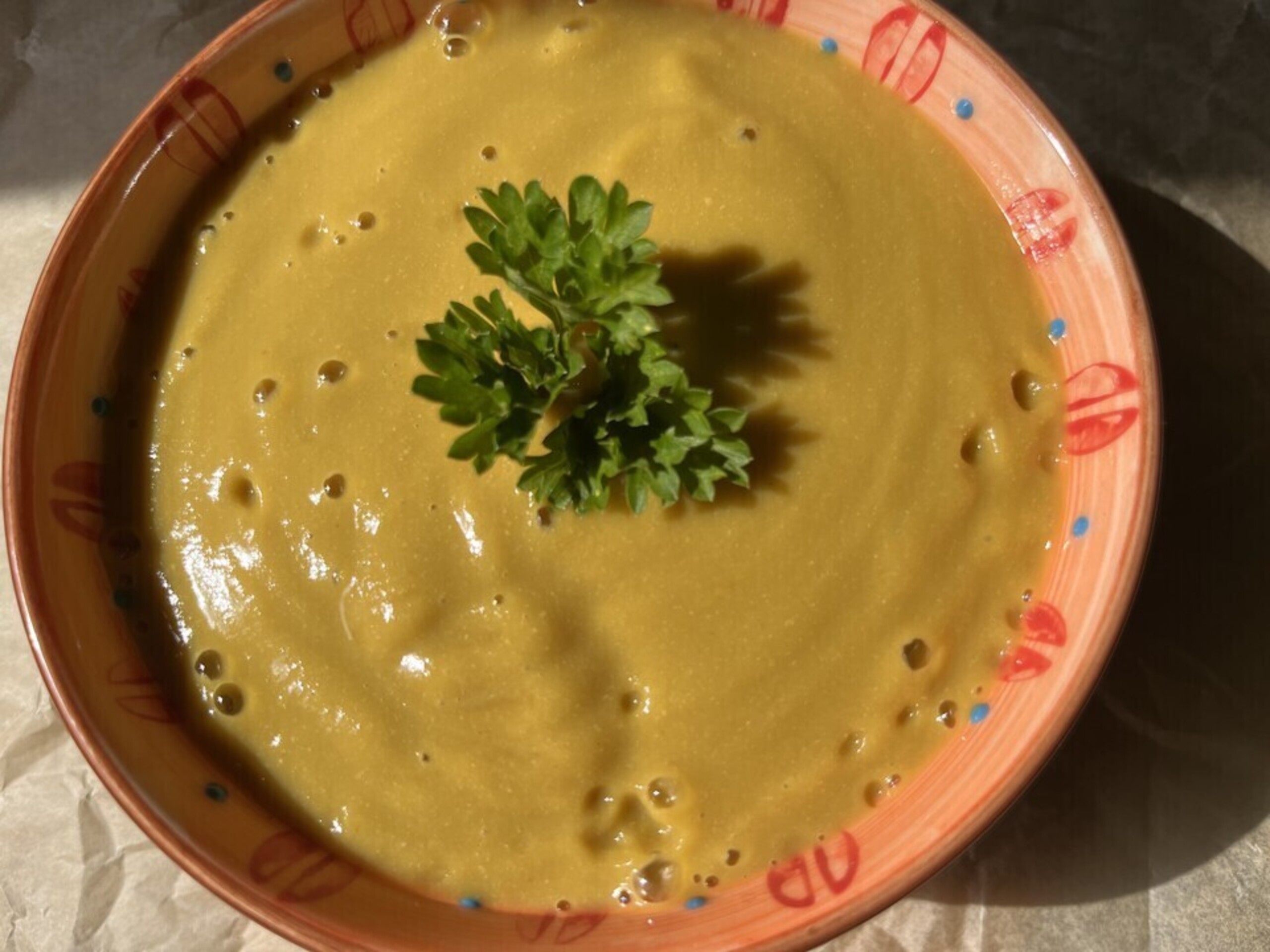
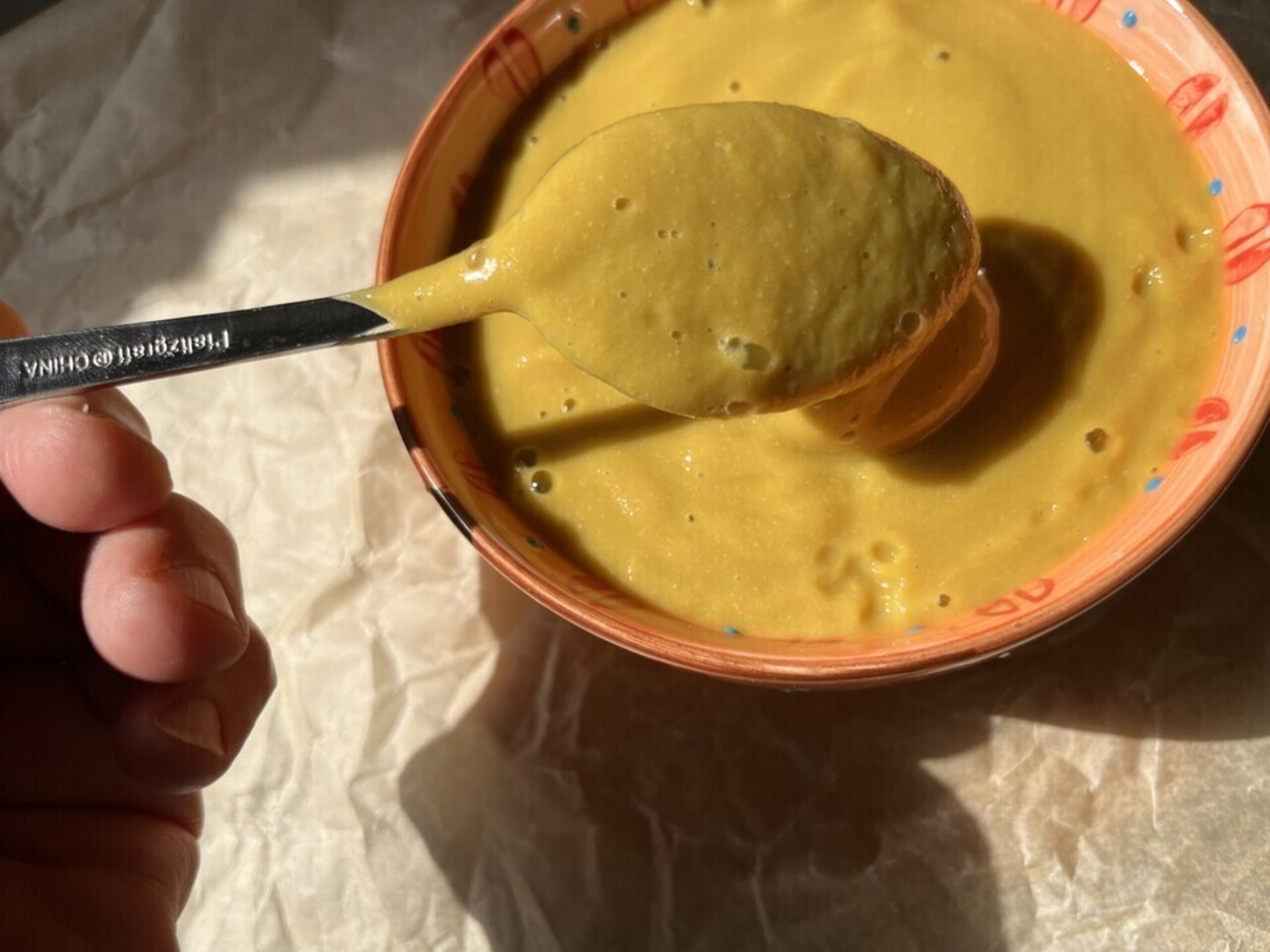
Place vegetables into a blender. Add nutritional yeast and stock. Pulse until you have developed a smooth and creamy texture. If you do not have a high-speed blender, pulse the ingredients in small amounts in a traditional blender, and blend accordingly.
The finished texture will adhere well to the back of a spoon.
If needed, you may want to adjust the flavors by adding a hot sauce, more nutritional yeast, etc.
Serve the sauce over cooked pasta, with baked potatoes, or even as a dip for cruidtes.
Closing Thoughts:
Save the leftover stock. Store it in the freezer using ice cube trays–this is perfect for using as a de-glazing sauce.
The sauce will yield between 6-8 cups. You can store in the fridge up to five days. It also does well if frozen–keeping for about 3-4 months in the freezer.
Develop a flavor that you like — play with spices and such. For example, want more garlic after the sauce is made? Use a good quality garlic powder.